


What's Happening?
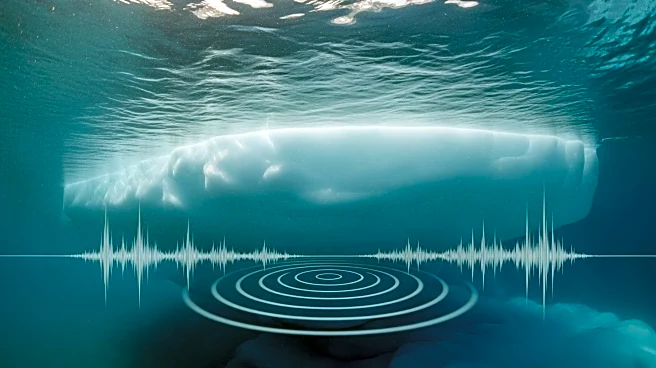
A recent scientific study published in npj Acoustics highlights the growing noise levels in the Arctic Ocean due to climate change and human activities. The melting of sea ice, expansion of shipping routes, and offshore industrial operations are contributing
to the transformation of one of the planet's quietest marine environments. This increase in underwater noise is impacting marine mammals such as bowhead whales, belugas, and narwhals, which rely on sound for navigation, hunting, and social interaction. The study emphasizes that prolonged exposure to elevated noise levels can mask communication signals, increase stress, and alter migration routes, potentially reshaping ecological relationships that have evolved over thousands of years.
Why It's Important?
The findings of this study are significant as they highlight the broader ecological impact of human activities and climate change on the Arctic environment. The increase in underwater noise not only affects marine wildlife but also has implications for Indigenous communities that depend on predictable animal movements for hunting and fishing. The study calls for targeted management of noise pollution, suggesting that not all sounds are harmful, and some community-based activities may have negligible impacts. This nuanced understanding can guide policy decisions to limit disruptive activities during sensitive periods, ensuring the protection of both wildlife and human livelihoods.
What's Next?
The study suggests that smarter policy decisions are needed to manage underwater noise in the Arctic. By comparing anthropogenic sounds with natural Arctic noise levels, researchers aim to guide targeted management strategies that limit the most disruptive activities during critical periods such as migration, breeding, or feeding seasons. This approach could help balance industrial operations with the preservation of ecological relationships and the subsistence activities of Indigenous communities.
Beyond the Headlines
The study challenges the notion that all increases in noise are automatically damaging, emphasizing the importance of understanding the frequency, intensity, duration, and timing of sounds. This perspective could lead to more informed and effective environmental policies that distinguish between low-impact community activities and industrial operations with far-reaching acoustic footprints. Such policies could help mitigate the impact of noise pollution on Arctic ecosystems and support sustainable development in the region.