







What's Happening?
Researchers across various U.S. universities are making significant strides in tracking, understanding, and remediating environmental carcinogens and toxic contaminants. At the University of Iowa, trainees are investigating how polychlorinated biphenyls
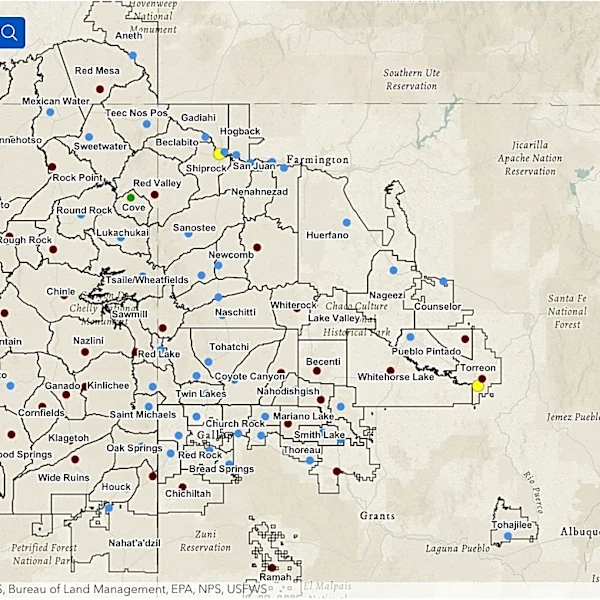
(PCBs) accumulate in fat tissue and contribute to diseases like diabetes and obesity, and how PCB exposure in school buildings affects children's neurodevelopment. The Massachusetts Institute of Technology (MIT) Superfund Research Program (SRP) Center is focusing on improving the detection and characterization of N-nitrosamines, potential human carcinogens found in drinking water. Meanwhile, the University of Rhode Island (URI) SRP Center is developing new tools to detect per- and polyfluorofluoroalkyl substances (PFAS) in aquatic environments and human liver samples, and studying their accumulation in fish. Additionally, Picoyune, a spin-off from UC Berkeley SRP, is commercializing technology for real-time mercury detection in air, soil, and water, while the University of New Mexico (UNM) SRP Center is addressing uranium contamination from abandoned mines and exploring fungal remediation methods for arsenic. Wayne State University is developing phytoscreening techniques to detect volatile organic compounds (VOCs) in urban environments, and the University of Louisville is examining how VOC exposure regulates vascular inflammation.
Why It's Important?
The ongoing research into environmental carcinogens and toxic contaminants holds immense importance for public health and environmental policy in the U.S. The findings from these studies can directly inform regulatory bodies like the EPA on the prevalence and impact of substances such as PCBs, N-nitrosamines, PFAS, mercury, uranium, arsenic, and VOCs. Understanding how these chemicals affect human health, from neurodevelopmental issues in children exposed to PCBs in schools to the link between VOCs and cardiovascular disease, can lead to more stringent environmental standards and targeted public health interventions. The development of advanced detection and remediation technologies, such as Picoyune's mercury monitors and URI's PFAS samplers, offers practical solutions for communities and industries to mitigate exposure risks. This research also highlights the disproportionate impact of environmental contamination on vulnerable populations, including indigenous communities affected by abandoned mines, and emphasizes the need for community-engaged research to translate scientific findings into actionable strategies for environmental justice.
What's Next?
The immediate future will likely see continued development and refinement of the detection and remediation technologies currently being researched. For instance, Picoyune aims to expand its mercury monitoring technology to detect other gases and equip more first responders. The URI SRP Center's work on PFAS accumulation in fish is expected to lead to tools for reliable on-site measurements, aiding remediation efforts. Further research will also focus on understanding the long-term health impacts of these contaminants, with studies like those at the UNM SRP Center assessing outcomes of long-term exposure to environmental metals in Navajo children. The collaborative and interdisciplinary nature of these SRP centers suggests that future efforts will involve integrating diverse scientific approaches, from geospatial analysis for land use planning at Texas A&M to machine learning for predicting protein interactions with PFAS at North Carolina State University. These advancements are crucial for informing future policy decisions, developing more effective public health strategies, and empowering communities to address environmental hazards.
Beyond the Headlines
Beyond the immediate scientific advancements, this collective research underscores a deeper societal shift towards recognizing and addressing the pervasive nature of environmental contaminants. The emphasis on community engagement, particularly with indigenous populations and those in urban environments, highlights a growing understanding that scientific solutions must be integrated with local knowledge and needs. The work on PCBs in schools and uranium in indigenous communities brings to light ethical considerations regarding environmental justice and the historical burden of pollution on marginalized groups. Furthermore, the development of non-toxic, lead-free, and low-VOC products, as exemplified by certain paint emulsions, indicates a broader trend towards green engineering and sustainable practices in industry. This research not only provides scientific data but also fosters a generation of interdisciplinary scientists committed to translating complex environmental health issues into tangible public health improvements and advocating for policy changes that prioritize human and environmental well-being.