
What's Happening?
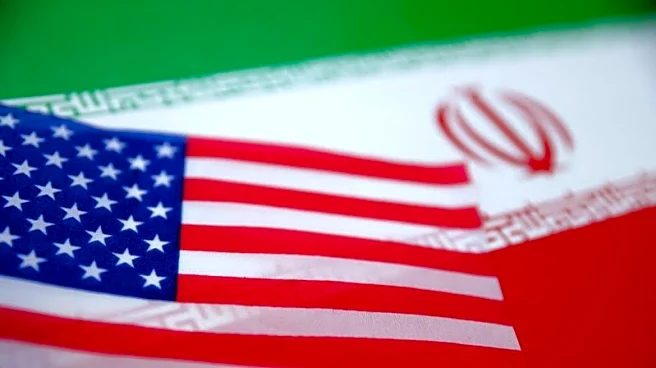
President Trump decided to call off planned military strikes on Iran after receiving information that the Iranian government had canceled the planned executions of 800 people. This decision came after a period
of heightened tension, where a U.S. strike on Iran seemed imminent. Allies had been alerted, and military assets were on the move. The intervention by U.S. Special Envoy Steve Witkoff, who communicated with Iranian Foreign Minister Abbas Araghchi, played a crucial role in defusing the situation. Additionally, several Middle Eastern countries, including Saudi Arabia and the United Arab Emirates, urged Trump to consider diplomatic solutions to avoid further destabilization in the region. Israeli Prime Minister Benjamin Netanyahu also contacted Trump, expressing concerns over Israel's preparedness for potential retaliation.
Why It's Important?
The decision to cancel the strikes on Iran is significant as it highlights the complex geopolitical dynamics in the Middle East and the potential for military actions to escalate into broader conflicts. The intervention by regional allies underscores the importance of diplomatic channels in maintaining stability. For the U.S., avoiding military engagement in Iran prevents potential backlash and preserves the safety of American troops stationed in the region. The move also reflects President Trump's preference for non-escalatory measures, aligning with his previous actions in similar situations. This decision could influence future U.S. foreign policy and military strategy in the Middle East.
What's Next?
Following the cancellation of the strikes, diplomatic efforts are likely to continue as the U.S. and its allies seek to address the underlying tensions with Iran. The focus may shift towards negotiations and leveraging diplomatic channels to ensure compliance with international norms. The U.S. administration might also reassess its military posture in the region to prevent similar crises. Regional stakeholders, including Israel and Saudi Arabia, will likely continue to engage with the U.S. to align on strategies that ensure regional security without resorting to military action.