



What's Happening?
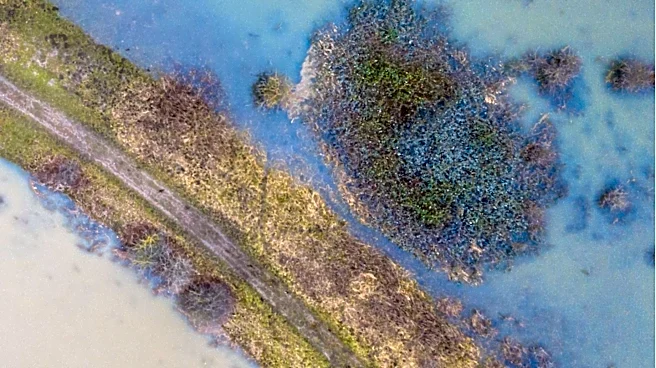
Falls Lake, a primary water source for Raleigh, North Carolina, has seen significant water level improvements following recent heavy rainfall. The lake's water-supply storage increased from 66% to 84% full, marking the highest level since mid-April. Despite
the improvement, the lake remains below its normal pool level, and conservation efforts continue. The drought affecting the area has persisted for nearly a year, with previous brief recoveries during winter months. The U.S. Army Corps of Engineers and local officials emphasize the need for continued rainfall to fully alleviate drought conditions.
Why It's Important?
The rise in Falls Lake's water levels is crucial for the region's water supply, serving over 650,000 residents. The drought has led to water restrictions and increased conservation efforts, impacting daily life and local agriculture. The recent rainfall offers hope for recovery, but sustained precipitation is necessary to ensure long-term water security. The situation highlights the broader challenges of managing water resources amid changing climate patterns and the importance of proactive measures to address drought conditions.
What's Next?
Local authorities will continue monitoring water levels and enforcing conservation measures. The U.S. Drought Monitor is expected to release updated reports on drought conditions, potentially reflecting improvements. Community engagement and education on water conservation practices may be reinforced. Long-term strategies to enhance water resilience, such as infrastructure improvements and alternative water sources, could be explored.