






What's Happening?
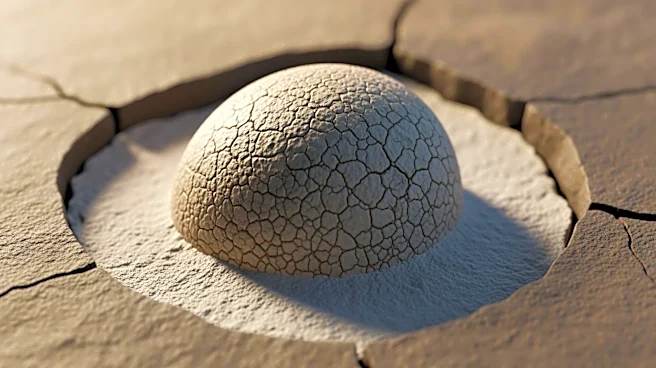
A groundbreaking study has confirmed that mammal ancestors, specifically the Lystrosaurus, laid eggs. This discovery was made through the analysis of a 250-million-year-old fossil found in South Africa. The fossil, belonging to a Lystrosaurus embryo,
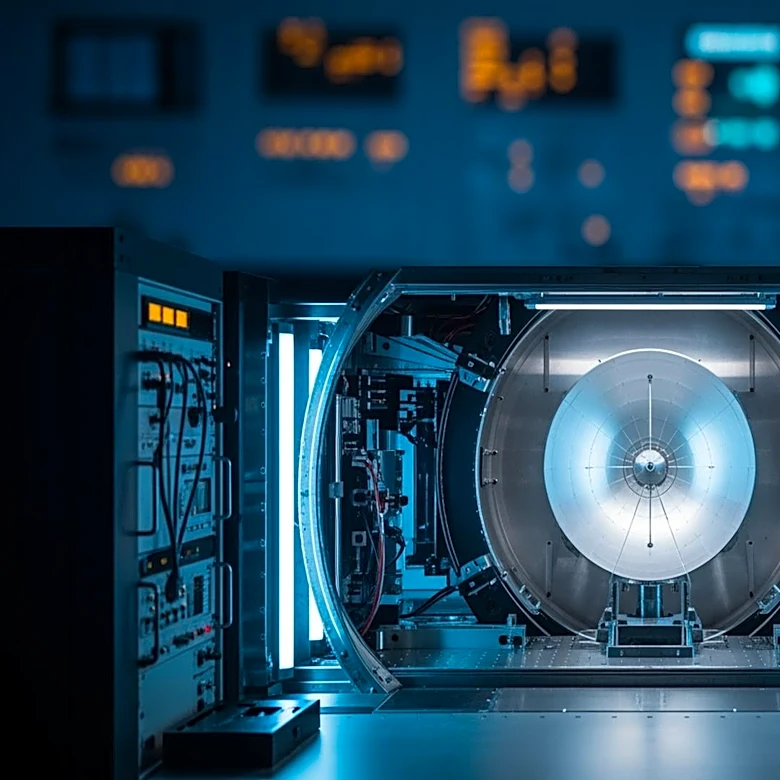
provides the first concrete evidence that these ancient creatures reproduced by laying eggs. The study, published in the journal PLOS One, utilized high-resolution computer tomography and synchrotron X-rays to reveal that the embryo's jaws were not fully fused, a trait seen in modern bird and turtle embryos. This finding suggests that the Lystrosaurus embryo was inside an egg when it died. The research also offers insights into why Lystrosaurus survived the 'Great Dying,' a mass extinction event 252 million years ago, by suggesting that their leathery eggs were better suited to dry environments.
Why It's Important?
This discovery is significant as it provides a deeper understanding of the evolutionary history of mammals. The ability of Lystrosaurus to lay large, leathery eggs may have contributed to its survival during harsh environmental conditions, offering a survival advantage. The study also supports the hypothesis that lactation may have evolved initially to keep eggs moist rather than to nourish offspring. This insight into the evolution of lactation and viviparity (live birth) is crucial for understanding the success of mammals. The findings challenge previous assumptions about the reproductive strategies of early mammal ancestors and highlight the complexity of evolutionary adaptations.
What's Next?
Further research is planned to explore the evolution of lactation and viviparity in early mammals. Understanding these traits could provide valuable insights into the evolutionary success of mammals. Researchers aim to unravel the timeline and mechanisms behind these defining characteristics, which remain largely unknown. This ongoing research could reshape our understanding of mammalian evolution and adaptation strategies.