






What's Happening?
TP-Link's Kasa smart home ecosystem is designed to provide users with control over various home systems, including lighting, climate, security, and entertainment. The system primarily uses standard Wi-Fi connectivity for many of its products, reducing
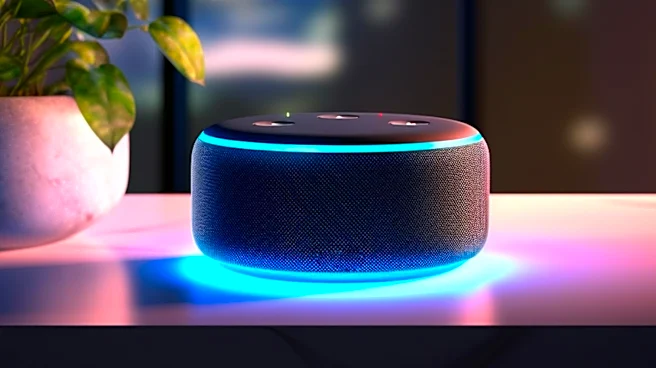
the need for additional hardware. The core of the ecosystem is the Kasa Smart app, available on both iOS and Android platforms, which serves as the primary interface for adding devices, creating routines, and monitoring status. Kasa offers an optional Smart Hub for more advanced automation, enabling local execution of routines even without internet connectivity. Key components include smart plugs, smart light switches, smart bulbs, security cameras and sensors, and smart speakers and displays. The setup process is guided by the app, allowing users to connect devices to their Wi-Fi network and configure settings such as renaming devices, assigning them to rooms, and creating schedules. Voice control is an integral feature, supported through integration with Amazon Alexa and Google Assistant, allowing users to control Kasa devices using simple voice commands like 'Alexa, turn off the bedroom lights' or 'Hey Google, activate movie mode'.
Why It's Important?
The integration of Kasa devices with Amazon Alexa and Google Assistant is significant for the U.S. smart home market as it enhances user convenience and broadens the appeal of the Kasa ecosystem. This cross-platform compatibility allows Kasa devices to be controlled alongside other compatible devices from different manufacturers, which is crucial for consumers who may already own smart home gear or prefer a specific voice assistant ecosystem. The ability to use simple voice commands for hands-free operation throughout the home simplifies the user experience, potentially increasing adoption rates for smart home technology. This integration also positions Kasa as a more versatile option in a competitive market, as it caters to a wider range of user preferences and existing smart home setups. For U.S. consumers, this means greater flexibility in building and managing their smart homes, reducing the friction often associated with integrating devices from various brands. The emphasis on user-friendly setup and management, combined with robust integration capabilities, contributes to the overall growth and accessibility of smart home solutions in the U.S.
What's Next?
The continued integration of Kasa with major voice assistant platforms like Alexa and Google Assistant suggests a future trend towards more seamless and interconnected smart home environments. Users can expect ongoing updates to the Kasa app and device firmware, which will likely introduce new features, improve compatibility, and enhance security. The modular approach of the Kasa ecosystem, allowing for scalability, indicates that new devices and functionalities will be introduced to meet evolving consumer demands. For Apple users, the level of HomeKit integration may expand, depending on specific model and firmware updates, offering more control through the Home app and Siri. This continuous development aims to solidify Kasa's position in the U.S. smart home market by offering a flexible and user-friendly platform that can adapt to various smart home configurations and preferences. The focus will remain on simplifying automation and providing diverse control options, including advanced routines triggered by time, sensors, and voice commands.
Beyond the Headlines
The widespread adoption of voice-controlled smart home devices, exemplified by Kasa's integration with Alexa and Google Assistant, raises deeper implications regarding privacy and data security. As more devices become interconnected and responsive to voice commands, the amount of personal data collected and processed by these systems increases. Users must consider the security measures in place, such as WPA2/WPA3 encryption and regular firmware updates, to protect their local Wi-Fi networks and devices. The reliance on cloud services for certain functionalities also brings into question the specifics of data storage and usage, necessitating a review of privacy policies. Furthermore, the convenience of voice control could lead to a subtle shift in user behavior, where verbal commands become the primary mode of interaction with technology, potentially impacting digital literacy and traditional interface usage. The ethical considerations around always-on listening devices and the potential for data breaches will continue to be a critical aspect of the smart home landscape, influencing consumer trust and regulatory frameworks in the U.S.