







What's Happening?
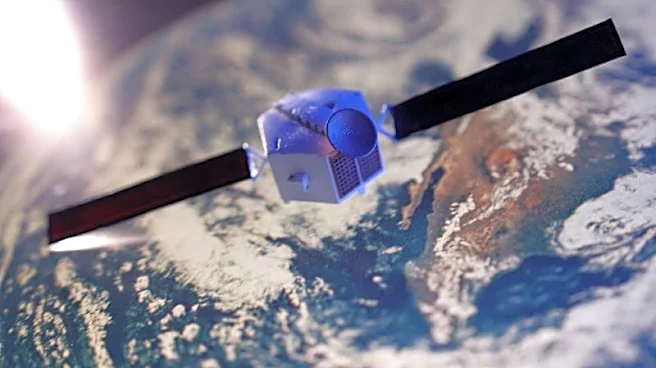
The Pentagon's Defense Innovation Unit (DIU) and the Space Development Agency (SDA) have awarded contracts to D-Orbit, Firefly Aerospace, and Katalyst Space. These contracts aim to develop and demonstrate the capability to capture and safely deorbit expired
satellites from Earth's orbit. The 'Deorbit-as-a-Service (DaaS)' project's ultimate goal is to launch a prototype spacecraft and initiate de-orbiting services by 2028. This initiative seeks to clear obsolete satellites from low Earth orbit (LEO), which is becoming increasingly congested. The initial awards total $8.4 million for preliminary designs, with options for future work. For instance, D-Orbit's contract has a potential value of $24 million. The DIU and SDA will jointly evaluate each design's technical maturity, mission approach, schedule, and affordability before selecting a solution for a full on-orbit demonstration. This effort expands the pool of commercial vendors for deorbiting services, following a previous $52.5 million contract awarded to Starfish Space by the SDA in January for similar services.
Why It's Important?
The increasing congestion in low Earth orbit poses significant risks, including potential collisions that could create more space debris and degrade the functionality of operational satellites. This initiative is crucial for maintaining the long-term sustainability of space operations, which are vital for numerous U.S. government and commercial activities, including internet connectivity, remote sensing, and missile tracking. By developing commercial deorbiting capabilities, the U.S. government aims to gain flexible, on-demand access to orbital logistics without the substantial cost and operational burden of owning and operating mission spacecraft. This could foster a new commercial space industry segment, creating economic opportunities and technological advancements. Furthermore, the ability to remove defunct satellites has national security implications, as it could deter adversaries from using similar capabilities as space weapons, a concern highlighted by China's SJ-21 satellite's actions in 2022.
What's Next?
The three contracted companies are expected to deliver their preliminary designs by the end of the year. Following this, the DIU and SDA will evaluate these designs to determine which solution will proceed to a full on-orbit demonstration. The goal is to begin de-orbiting services by 2028. Beyond deorbiting, the technologies developed under these contracts could be adapted for other critical LEO logistics missions for the U.S. government, such as refueling, repairing, inspecting, and repositioning satellites. This suggests a future where in-space servicing becomes a more common and accessible capability, potentially extending the lifespan of valuable space assets and enhancing the resilience of U.S. space infrastructure. The success of these initial phases will likely influence future funding and the broader adoption of commercial space logistics services by the government.
Beyond the Headlines
The DaaS project addresses a growing ethical and environmental challenge in space: the proliferation of orbital debris. As more satellites are launched, particularly in large constellations, the risk of collisions and the creation of more debris escalates, threatening future space endeavors. This initiative reflects a proactive approach by the U.S. government to manage this shared resource and mitigate potential environmental damage in space. The development of these capabilities also raises questions about the dual-use nature of space technology; while intended for debris removal, the same technology could theoretically be adapted for offensive purposes, such as disabling or moving other nations' satellites. This underscores the need for clear international norms and regulations regarding in-space operations to prevent an arms race in orbit and ensure the peaceful and sustainable use of outer space.