



What's Happening?
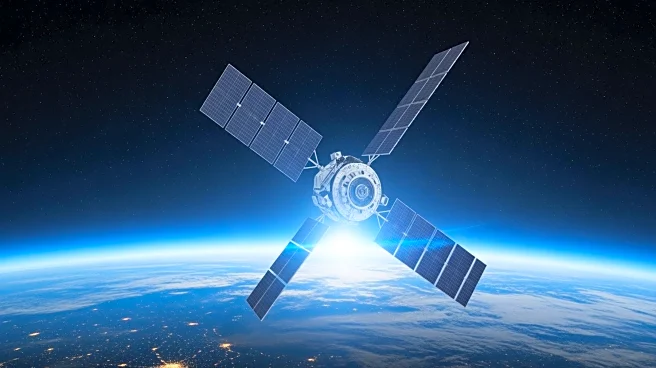
SpaceX successfully launched its first mission of 2026 with the deployment of an Italian Earth-observation satellite from Vandenberg Space Force Base. The Falcon 9 rocket carried the COSMO-SkyMed Second Generation Flight Model 3 satellite, a 1,700-kg
Italian surveillance satellite, into orbit. This mission marks a significant achievement for both SpaceX and Italy, as it enhances Italy's space capabilities with advanced synthetic aperture radar technology. The satellite was deployed into a Sun-synchronous orbit at an altitude of 620 kilometers, designed for a five-year operational life. The mission also highlighted SpaceX's continued dominance in commercial spaceflight, with the Falcon 9 booster completing its 21st flight and successfully landing at Landing Zone 4.
Why It's Important?
This launch underscores the strategic importance of international cooperation in space exploration. For Italy, the COSMO-SkyMed program represents a critical advancement in national security and environmental monitoring capabilities. The satellite's dual-use technology allows for continuous operation through cloud cover and darkness, essential for disaster response and strategic intelligence. For SpaceX, the successful mission reinforces its position as a leader in commercial spaceflight, showcasing the reliability and cost-effectiveness of its reusable rocket technology. This capability is crucial as global demand for space access grows, positioning SpaceX to capture a larger market share in the space industry.
What's Next?
Following this successful launch, SpaceX plans to continue its aggressive launch schedule throughout 2026, supporting a variety of missions from national security payloads to commercial satellite constellations. The COSMO-SkyMed satellite will begin its operational phase, contributing to Italy's Earth observation capabilities. The partnership between SpaceX and international space agencies is likely to expand, as nations seek reliable and cost-effective access to space. This trend may lead to further collaborations and advancements in space technology, enhancing global capabilities in environmental monitoring and strategic intelligence.