






What's Happening?
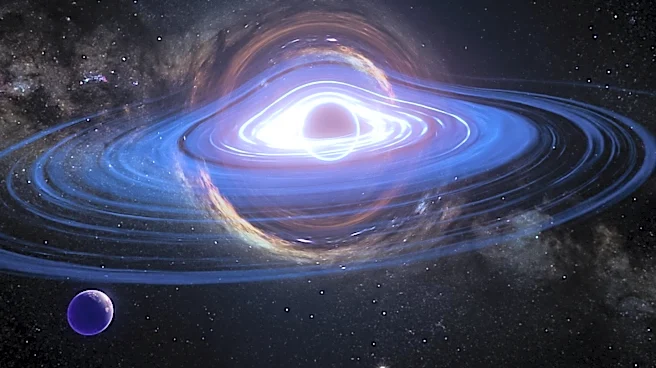
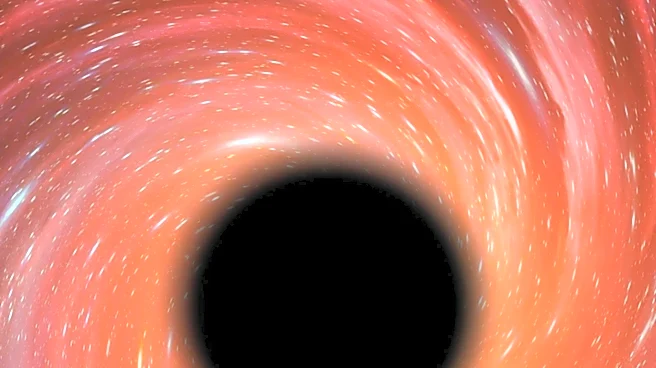
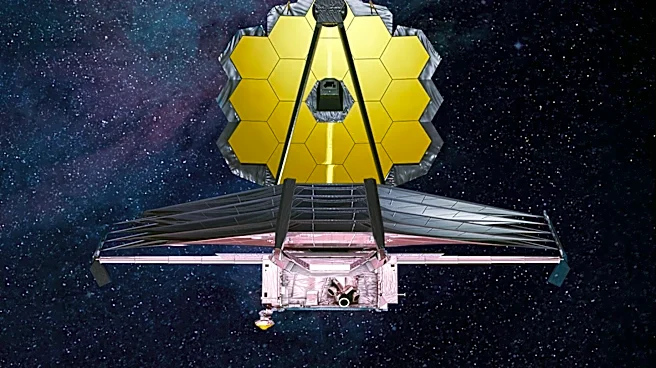
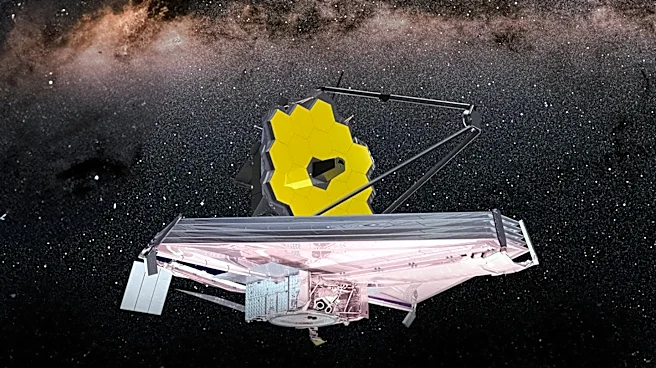
Astronomers have discovered the first of 10,000 missing black holes in the Omega Centauri star cluster using data from the Hubble and James Webb space telescopes. The discovery was made by observing a star orbiting an unseen massive object, confirmed
to be a black hole with a mass 4.46 times that of the sun. This finding is significant as Omega Centauri is believed to be the core of a dwarf galaxy, and the presence of black holes supports this theory. The discovery was made possible through astrometry, tracking the star's motion over a 20-year period.
Why It's Important?
The discovery of a stellar-mass black hole in Omega Centauri provides crucial insights into the formation and evolution of black holes in globular clusters. It also enhances our understanding of gravitational wave events, as these environments are key sites for black hole mergers. This finding could lead to further discoveries of black holes in similar clusters, advancing our knowledge of cosmic phenomena and the history of our galaxy. The research underscores the importance of space telescopes in uncovering hidden aspects of the universe.
What's Next?
Astronomers plan to continue using data from the Hubble and James Webb telescopes to search for more black holes in Omega Centauri. The upcoming launch of NASA's Nancy Grace Roman Space Telescope is expected to further aid in the discovery of black hole binary systems within the Milky Way. These efforts will contribute to a deeper understanding of black hole populations and their role in the universe, potentially leading to new breakthroughs in astrophysics.