





What's Happening?
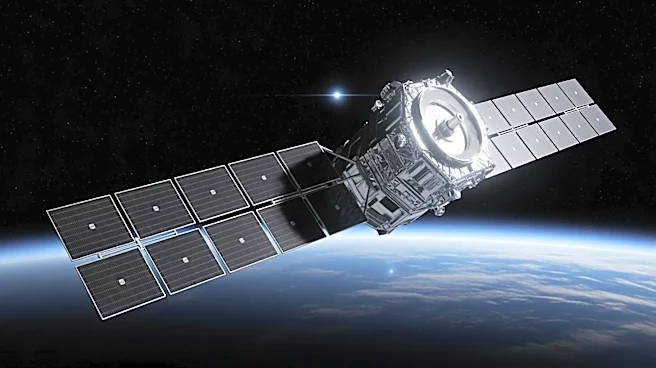
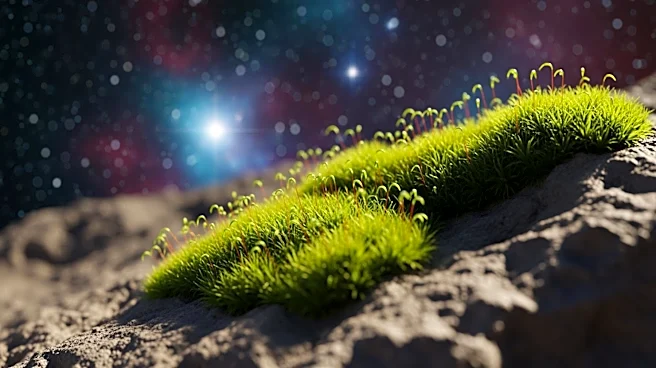
A groundbreaking experiment conducted outside the International Space Station (ISS) has demonstrated that a species of moss, Physcomitrium patens, can survive the harsh conditions of space. Researchers attached the moss to the exterior of the ISS, exposing
it to lethal radiation and extreme temperatures for 283 days. Remarkably, over 80% of the spores survived and were able to regenerate upon returning to Earth. This experiment marks the first time a terrestrial plant has been shown to endure prolonged exposure in space, suggesting that plant life could potentially travel between planets and thrive in favorable environments.
Why It's Important?
The survival of moss in space has significant implications for space exploration and the potential for long-term human settlement beyond Earth. This discovery supports the theory of panspermia, which suggests that life on Earth may have originated from extraterrestrial sources. The ability of plants to survive in space could lead to the development of sustainable ecosystems on other planets, facilitating human colonization. Additionally, this research enhances our understanding of life's resilience and adaptability, which is crucial for future space missions and the search for extraterrestrial life.
What's Next?
Future research will likely focus on understanding the mechanisms that enable the moss to survive in space, such as its DNA repair systems and protective spore structure. Scientists may also explore the potential for other plant species to endure space conditions, which could lead to the development of space agriculture. This research could pave the way for creating self-sustaining habitats on other planets, supporting human life and reducing reliance on Earth-based resources.
Beyond the Headlines
The experiment's success highlights the potential for using plants in bioregenerative life support systems, which could provide oxygen and food for astronauts on long-duration space missions. This discovery also raises ethical and philosophical questions about the role of life in the universe and humanity's responsibility in spreading life beyond Earth. As space exploration advances, these considerations will become increasingly important in shaping policies and practices.