



What's Happening?
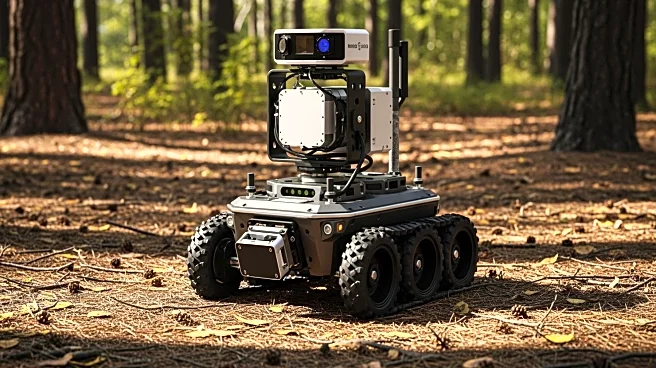
Greensea IQ has successfully demonstrated the use of the Bayonet 350 Autonomous Underwater Ground Vehicle (AUGV) for detecting unexploded ordnance (UXO) at a former military site in Maine. The operation involved navigating complex coastal environments
and collecting high-resolution geophysical data using an RTK-GPS system and the APEX three-dimensional electromagnetic system. The demonstration, conducted over five days, covered approximately eight acres of surf zone and shoreline, even during a New England blizzard. The data collected was processed to classify and identify UXO targets for further investigation by the U.S. Army Corps of Engineers.
Why It's Important?
The successful demonstration of autonomous UXO detection represents a significant advancement in addressing the risks posed by unexploded munitions in marine environments. Traditional methods of UXO detection are often limited by the complexity and danger of nearshore and surf zone areas. The use of autonomous systems like the Bayonet 350 AUGV offers a safer, more efficient, and cost-effective solution for surveying large areas and accurately identifying UXO. This technology has the potential to enhance public safety, facilitate coastal development, and reopen restricted areas for public use.
Beyond the Headlines
The deployment of autonomous UXO detection technology could lead to broader applications in environmental and defense sectors. By reducing the need for human intervention in hazardous areas, these systems can minimize risks to personnel and improve the efficiency of maritime operations. The collaboration between Greensea IQ and White River Technologies highlights the potential for public-private partnerships to drive innovation in addressing environmental and safety challenges. As this technology becomes more widely adopted, it could transform the way unexploded ordnance is managed globally.