








What's Happening?
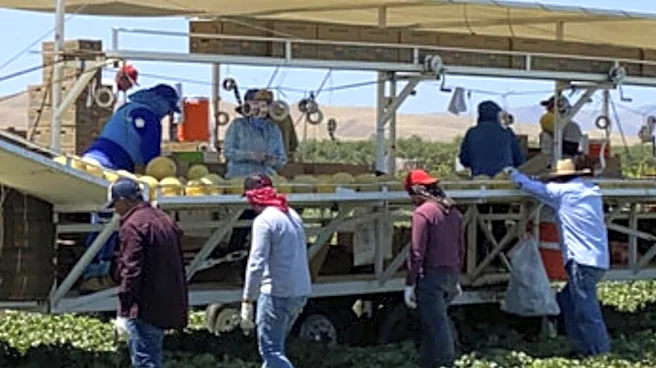
The H-2A visa program, which allows for the hiring of seasonal agricultural laborers, is under scrutiny as demand from farmers continues to rise. The Trump administration has aimed to limit legal entry into the U.S., including worker visas, but some Republicans
are advocating for an expansion of the H-2A program. Farmers, particularly in the dairy industry, are pushing for changes that would allow year-round access to these visas, as current regulations restrict them to seasonal work. A new bill introduced by House Agriculture Committee Chairman GT Thompson seeks to address these concerns by extending the time frame for which farmers can employ H-2A workers and providing a pathway for undocumented workers to join the program legally. The proposal has garnered support from the farming industry but faces opposition from labor groups and conservative factions who are concerned about the implications for domestic workers and potential abuses of the system.
Why It's Important?
The proposed changes to the H-2A visa program are significant for the U.S. agricultural sector, which relies heavily on migrant labor. With over half of farmworkers lacking legal status, the program offers a legal avenue for farmers to secure necessary labor. However, the current limitations of the program, such as its seasonal nature, pose challenges for industries like dairy farming that require year-round labor. The expansion of the program could help stabilize the labor force for farmers, potentially increasing productivity and economic output. On the other hand, labor groups argue that the program should include pathways to legal status for existing undocumented workers to prevent exploitation and ensure fair treatment. The outcome of this legislative effort could have wide-reaching effects on labor practices, immigration policy, and the agricultural economy.
What's Next?
The bill introduced by GT Thompson will likely face debate in Congress, with stakeholders from various sectors weighing in. Farmers are expected to continue advocating for the expansion, emphasizing the need for a reliable labor force. Labor groups and conservative organizations may push for amendments to address their concerns about worker rights and immigration enforcement. The legislative process will determine whether the proposed changes are enacted and how they will be implemented. The outcome could influence future immigration policy and labor practices in the agricultural sector.