
What's Happening?
The American backyard is shrinking as homeowners choose to expand their homes rather than move, influenced by high mortgage rates. With interest rates having risen significantly since the early 2020s,
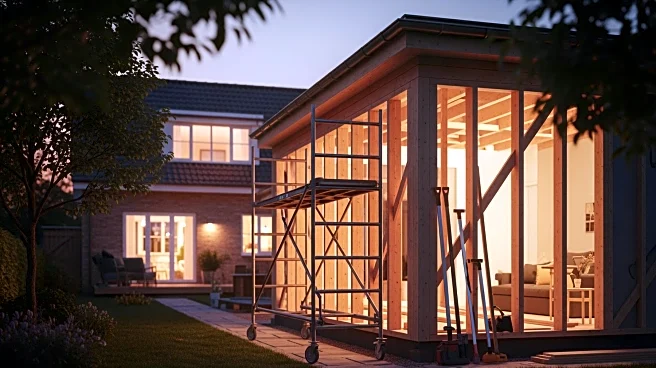
many homeowners are reluctant to sell their homes and take on new loans at higher rates. Instead, they are opting to build additions to their existing homes, often encroaching on their yard space. This trend is evident in the increasing number of home remodeling projects, as reported by Nicole Goolsby Morrison, a home remodeling company owner in Raleigh. The trend is further supported by data showing a rise in building permits for major home construction projects. Millennials, in particular, are leading this shift, preferring to stay in their homes due to the financial benefits of low locked-in mortgage rates.
Why It's Important?
This trend has significant implications for the housing market and urban planning. As more homeowners choose to expand rather than move, the demand for new homes may decrease, potentially stabilizing or even reducing housing prices. However, this could also lead to a reduction in available green space in urban and suburban areas, impacting community aesthetics and environmental quality. The shift towards home expansions reflects broader economic conditions, including high interest rates and housing affordability challenges. It also highlights changing cultural preferences, with more people valuing indoor space over outdoor areas. This could influence future housing designs and urban development policies.
What's Next?
As this trend continues, it may prompt changes in local zoning laws and building regulations to accommodate the growing demand for home expansions. Urban planners and policymakers might need to address the environmental and community impacts of reduced yard spaces. Additionally, the construction industry could see increased demand for remodeling services, potentially leading to job growth in this sector. Homeowners may also explore innovative ways to maximize their existing spaces, such as vertical expansions or multi-functional room designs.
Beyond the Headlines
The cultural shift towards valuing indoor space over outdoor areas could have long-term implications for social interactions and community life. As people spend more time indoors, there may be a decline in neighborhood engagement and outdoor activities, affecting community cohesion. This trend also raises questions about the sustainability of urban living, as reduced green spaces can impact biodiversity and local ecosystems. Furthermore, the financial dynamics of homeownership are changing, with more people leveraging home equity for expansions rather than moving, which could influence future economic policies and housing market strategies.