








What's Happening?
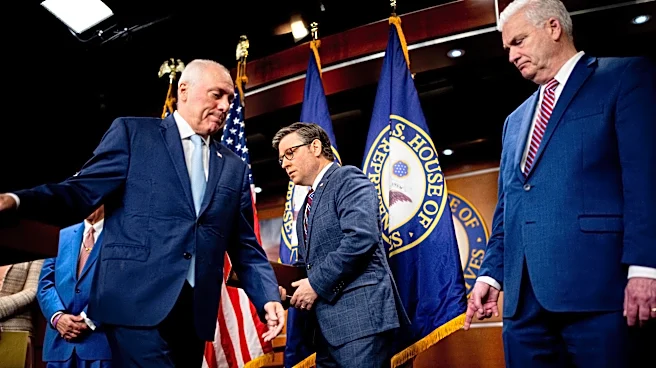
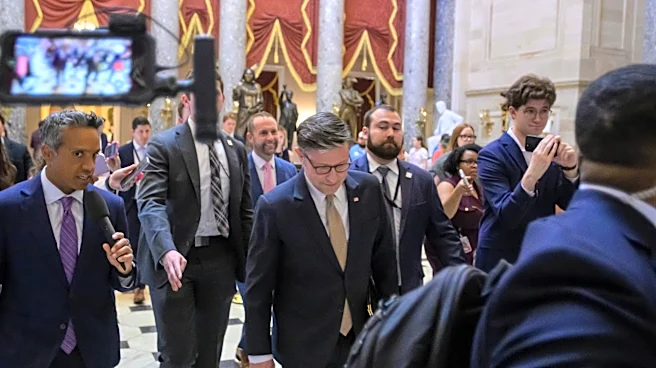
The U.S. House of Representatives is currently at a standstill due to a Republican rebellion over voting restrictions, leading to an early recess for the July Fourth holiday. Speaker Mike Johnson was forced to cancel votes and send lawmakers home after
failing to pass a procedural measure, known as a 'rule,' which was blocked by a group of Republicans. This impasse is primarily centered around the SAVE America Act, an election reform bill that President Trump has prioritized. The disagreement has also stalled the Pentagon's annual defense policy bill and disrupted the legislative schedule. Some Republicans are dissatisfied with Johnson's strategies and the lack of a promised vote on a separate border security bill. The situation has caused significant disruption within the GOP-controlled Congress, affecting its ability to achieve policy goals as the midterm elections approach.
Why It's Important?
The current deadlock in Congress highlights the challenges faced by the GOP in managing internal divisions, which could have significant implications for their legislative agenda. The inability to pass key legislation, such as the defense policy bill, could impact national security and other critical government functions. Additionally, the infighting may weaken the GOP's position ahead of the midterm elections, as it showcases a lack of unity and effectiveness in governance. This situation also underscores the influence of hardline factions within the party, which can complicate leadership efforts to pass significant reforms. The broader impact on public policy and governance could be substantial, affecting various stakeholders who rely on Congress to perform its basic functions.
What's Next?
As Congress remains in recess, the focus will likely shift to resolving the internal GOP conflicts that have led to the current impasse. Speaker Johnson and other Republican leaders will need to negotiate with hardliners to find a path forward for the SAVE America Act and other stalled legislation. The outcome of these negotiations could determine the GOP's ability to advance its policy agenda and maintain cohesion within the party. Additionally, the response from Democrats, who have expressed frustration over the situation, could influence future legislative dynamics. The resolution of this deadlock will be crucial for Congress to resume its functions and address pressing national issues.