




What's Happening?
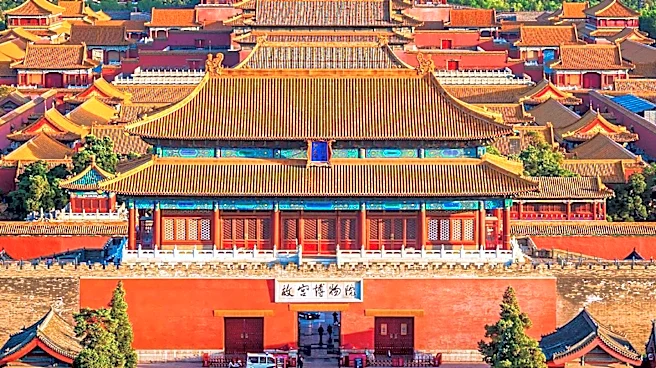
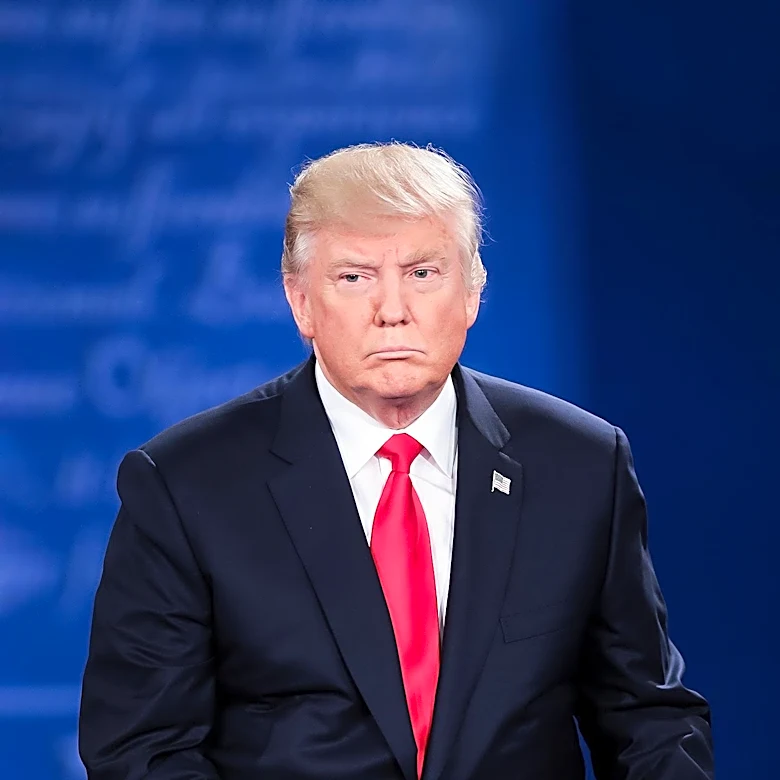
President Trump's recent interactions and statements regarding Taiwan and China have sparked concern among U.S. allies and experts. During a meeting in Beijing in May, President Trump and Chinese President Xi Jinping discussed disagreements over Taiwan,
with Xi warning of an "extremely dangerous situation" that could lead to conflict. Following this, President Trump described U.S. weapon sales to Taiwan as a "very good negotiating chip" in broader discussions with China on trade, nuclear arms, and artificial intelligence. He also expressed skepticism about U.S. willingness to defend Taiwan, stating, "The last thing we need right now is a war that’s 9,500 miles away." This stance contrasts with previous administrations and has led to a hold on significant arms packages to Taiwan, including an $11 billion deal approved by the Trump administration and a proposed $14 billion package. The Nationalist Party in Taiwan, led by Cheng Li-wun, has also shown a willingness to engage with Beijing, with Cheng advocating for reconciliation and blocking defense spending for indigenous drone production, further complicating Taiwan's defense capabilities.
Why It's Important?
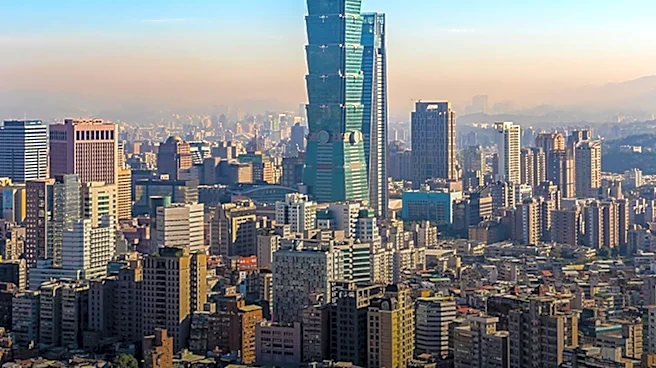
President Trump's approach to Taiwan carries significant implications for U.S. foreign policy, regional stability, and the global balance of power. His characterization of Taiwan as a 'negotiating chip' and his public questioning of U.S. defense commitments could undermine decades of strategic ambiguity, a policy designed to deter both Chinese aggression and Taiwanese declarations of independence. This shift in rhetoric and policy could embolden China to increase pressure on Taiwan, potentially leading to a more volatile situation in the Taiwan Strait, a critical global shipping lane. For U.S. allies in Asia, particularly Japan and South Korea, President Trump's statements may erode confidence in U.S. security guarantees, potentially prompting them to reconsider their own defense strategies or seek alternative alliances. Economically, Taiwan is a crucial hub for advanced semiconductor manufacturing, and any instability could severely disrupt global supply chains, impacting industries reliant on these critical components, including the U.S. technology sector. The perceived weakening of U.S. resolve could also diminish its influence in the Indo-Pacific region.
What's Next?
The future trajectory of U.S.-Taiwan relations will largely depend on ongoing diplomatic engagements between the U.S. and China, particularly the upcoming meeting between President Trump and President Xi in September. Taiwan's internal political landscape, especially the upcoming 2028 presidential election, will also be critical, as candidates like Cheng Li-wun may continue to advocate for closer ties with Beijing. The U.S. Congress and defense experts are likely to continue advocating for strong support for Taiwan's defense, potentially creating friction with the executive branch. Taiwan will need to navigate its defense strategy carefully, balancing the need for self-reliance with the uncertain prospect of U.S. intervention. The international community will closely watch for any shifts in military posturing in the Taiwan Strait and for further developments in U.S. arms sales to Taiwan. The debate over Taiwan's defense budget and the development of its indigenous defense industry will also remain a key point of contention within Taiwan's Parliament.
Beyond the Headlines
The evolving situation surrounding Taiwan highlights a deeper philosophical debate within U.S. foreign policy regarding the value of alliances and the role of democratic principles in international relations. President Trump's transactional approach to foreign policy, prioritizing perceived immediate U.S. interests over long-standing commitments, challenges the traditional framework of U.S. global leadership. This shift could lead to a more multipolar world order, where smaller nations like Taiwan feel compelled to make concessions to larger powers in the absence of reliable external support. The internal divisions within Taiwan, particularly the Nationalist Party's willingness to engage with China, reflect a growing pragmatism driven by a perceived decline in U.S. reliability and the overwhelming military and economic power of mainland China. This situation also raises questions about the long-term viability of democratic governance in the face of authoritarian pressure, especially given the example of Hong Kong. The strategic importance of Taiwan's semiconductor industry adds another layer of complexity, intertwining economic security with geopolitical stability.