



What's Happening?
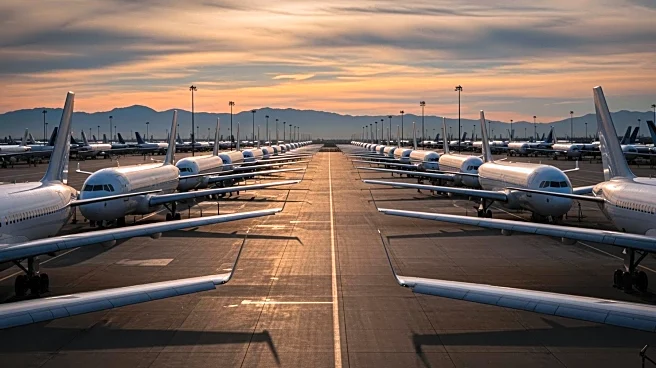
Teruel airport in eastern Spain has become a temporary storage hub for aircraft due to the ongoing conflict with Iran, which has led to the closure of airspace and rerouting of flights. The airport, known for its dry, salt-free climate ideal for preserving
planes, is accommodating around 20 aircraft, including 17 from Qatar Airways. This situation mirrors the airport's role during the COVID-19 pandemic when it housed around 140 planes. The airport, a former military base, is one of Europe's largest aircraft maintenance and storage facilities, with a capacity for 250 wide-body and up to 400 narrow-body aircraft. Alejandro Ibrahim, the general manager, noted that airlines are revising their fleets and routes, seeking safer parking locations in Europe. The airport's operations are currently focused on providing refuge for these aircraft, although its primary business is aircraft maintenance.
Why It's Important?
The use of Teruel airport as a storage facility highlights the broader impact of geopolitical conflicts on global air travel and logistics. The rerouting of flights and the need for secure storage locations for aircraft underscore the vulnerabilities in international aviation networks. This situation affects airlines' operational costs and logistics, potentially leading to increased ticket prices and altered flight schedules. The conflict also poses risks to jet fuel supplies, further complicating airline operations. For Teruel airport, while the influx of aircraft provides temporary business, it disrupts its primary focus on maintenance services, which are more profitable and sustainable in the long term. The situation reflects the interconnectedness of global events and their ripple effects on industries such as aviation.
What's Next?
The future operations at Teruel airport will depend on the duration and developments of the conflict with Iran. As airlines continue to adjust their strategies, the airport may see fluctuating numbers of aircraft arrivals. The airport management is working on a week-to-week basis, adapting to the evolving needs of airlines. If the conflict persists, more Middle Eastern airlines might seek storage solutions at Teruel, increasing its temporary role as a refuge. However, the airport's management hopes for a resolution to the conflict, which would allow them to return to their core business of aircraft maintenance, thereby enhancing their economic stability and growth.