





What's Happening?
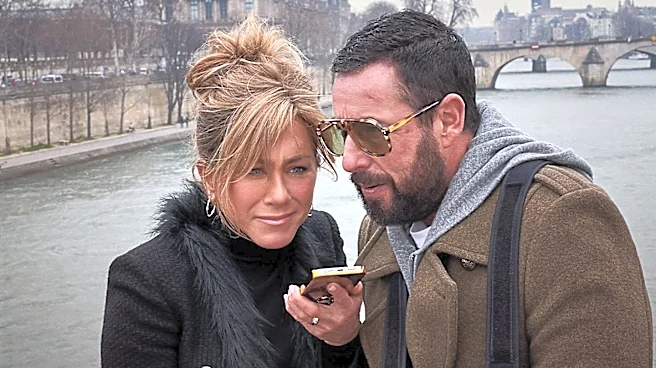
Environmental groups are raising concerns about construction activities at Cala Moresca, a beach in Golfo Aranci, Gallura, Italy, chosen as a film set for an upcoming Netflix and Panorama Films production, 'Un weekend da bamboccioni 3,' starring Adam
Sandler. The active citizenship group Maremosso has highlighted the potential environmental impact on this coastal area, which overlooks Figarolo island and is backed by the Capo Figari promontory. This region falls under strict landscape protection regulations as a Site of Community Importance (SIC). Environmentalists specifically reported the use of bulldozers on the path connecting the town of Golfo Aranci to the cove where the Hollywood filming is scheduled to take place. The ecologists from GrIG have also requested clarification and continuous monitoring of activities in the area over the coming weeks.
Why It's Important?
This situation underscores the growing tension between economic development, such as film production, and environmental preservation, particularly in ecologically sensitive areas. The use of a protected natural site for a major film production raises questions about the adequacy of environmental impact assessments and the enforcement of conservation regulations. For the film industry, this incident highlights the increasing scrutiny over location choices and production practices, potentially leading to more stringent environmental guidelines and public relations challenges. For local communities and environmental organizations, it represents a critical test of their ability to protect natural heritage against commercial interests. The outcome of this dispute could set a precedent for future film productions in protected areas, influencing how environmental concerns are balanced with economic opportunities in the U.S. and globally.
What's Next?
Environmental groups, including Maremosso and GrIG, are expected to continue their calls for clarification and constant monitoring of the construction activities at Cala Moresca. Local authorities and film production companies, Netflix and Panorama Films, will likely face pressure to address these concerns, potentially requiring them to provide detailed environmental impact reports or modify their construction plans. The situation could lead to further investigations by regulatory bodies responsible for protected areas. Depending on the response, there might be public protests or legal actions initiated by environmental advocates. This event could also prompt a broader review of permitting processes for commercial activities in ecologically sensitive regions, potentially leading to stricter regulations for film productions and other industries operating in such areas.
Beyond the Headlines
The controversy at Cala Moresca extends beyond a single film set, touching upon the broader ethical responsibilities of global corporations and the entertainment industry in preserving natural environments. It highlights the challenge of balancing economic benefits, such as job creation and tourism from film production, with the long-term ecological health of protected sites. The incident could spark a wider debate on 'green' film production practices and the need for greater transparency and accountability from studios operating in sensitive ecosystems. Furthermore, it underscores the power of local environmental groups and active citizens in holding large entities accountable, demonstrating how grassroots movements can influence corporate behavior and public policy. This situation may also encourage a re-evaluation of how cultural and natural heritage sites are valued and protected in the face of commercial exploitation, potentially leading to more robust international standards for environmental stewardship in media production.