




What's Happening?
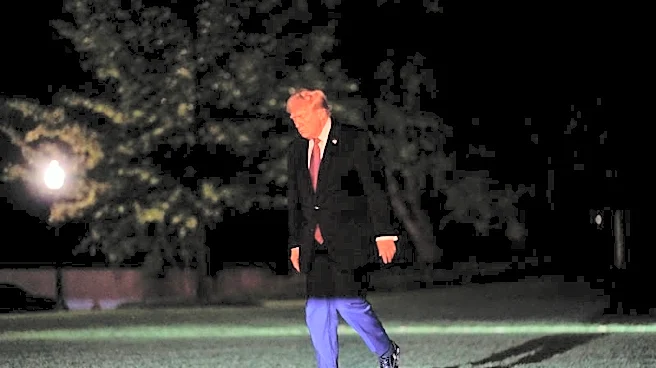
President Donald Trump convened a Situation Room meeting to address escalating tensions in the Strait of Hormuz and ongoing nuclear negotiations with Iran. The meeting included top U.S. officials such as Vice President JD Vance and Secretary of State
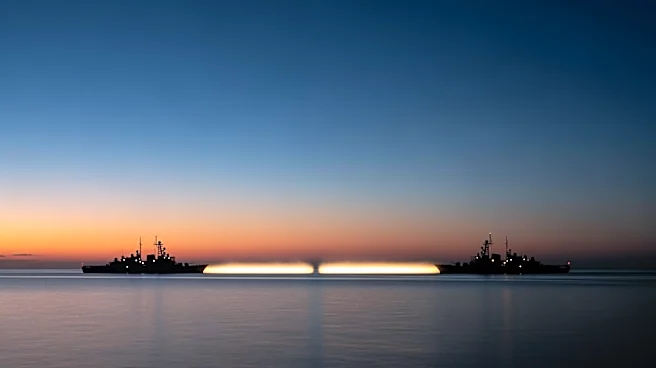
Marco Rubio. The discussions come as a fragile ceasefire between the U.S. and Iran is nearing expiration, with no clear timeline for further negotiations. Iran has threatened the strategic shipping corridor and attacked vessels in the region, raising concerns about potential conflict. Despite some progress in talks, particularly on uranium enrichment, tensions remain high.
Why It's Important?
The situation in the Strait of Hormuz is critical due to its role as a major global oil transit route. Any disruption could have significant economic repercussions, affecting oil prices and global markets. The U.S. administration's handling of the situation is crucial, as it could impact international relations and regional stability. The potential for renewed hostilities poses a risk to global security and economic stability. The outcome of these negotiations could influence U.S. foreign policy and its approach to Middle Eastern geopolitics.
What's Next?
The U.S. and Iran are expected to continue diplomatic efforts, possibly through intermediaries, to resolve the tensions. The international community will be closely monitoring the situation, as any escalation could lead to broader conflict. The U.S. administration may face pressure to take decisive action to protect its interests and maintain regional stability. The outcome of these talks could set the tone for future U.S.-Iran relations and impact global diplomatic efforts in the region.