


What's Happening?
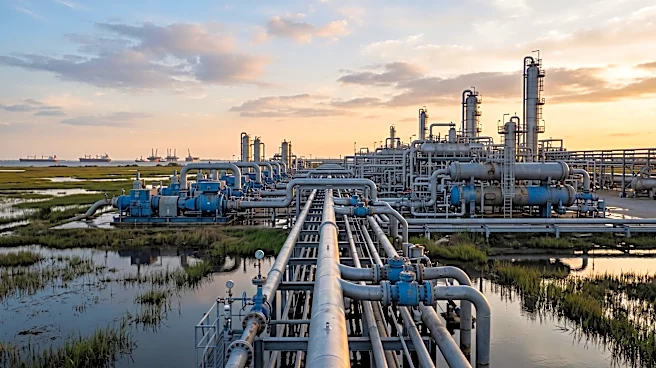
Louisiana residents and environmental organizations, including the Sierra Club, are protesting Entergy's proposal to construct seven additional gas plants to power Meta's Hyperion data center. The proposed plants are intended to meet the substantial energy
demands of the data center, which is projected to require more electricity than a city four times the size of New Orleans. Protesters rallied in Baton Rouge, urging the Louisiana Public Service Commission (PSC) to reject the plan, citing concerns about increased electricity costs for existing customers, environmental pollution, and a lack of transparency surrounding the project. The Sierra Club has formally requested the PSC to implement customer protections, such as restructuring depreciation terms to shield ratepayers from stranded asset risks if Meta abandons the project, requiring Meta to cover the full cost of associated transmission lines, and ensuring Meta is responsible for 100% of its gas fuel costs and the lifetime costs of the proposed gas units. Entergy has reportedly shown little willingness to agree to these stipulations.
Why It's Important?
This situation highlights a growing tension between the energy demands of large technology companies, particularly data centers, and the concerns of local communities regarding environmental impact and economic burden. The proposed gas plants raise significant questions about who bears the cost of infrastructure development for private enterprises and the long-term environmental consequences. If approved, the project could lead to higher electricity bills for Louisiana residents and increased air and water pollution. The lack of transparency, with much of Entergy's analysis shielded by NDAs, further exacerbates public distrust and makes it difficult for the public and oversight bodies to fully assess the project's implications. This case could set a precedent for how states balance economic development driven by tech giants with environmental protection and consumer interests, potentially influencing future energy infrastructure projects across the U.S.
What's Next?
The Louisiana Public Service Commission (PSC) is scheduled to hold a December meeting where commissioners will vote on Entergy's proposal. This meeting is expected to be the sole opportunity for public input before the vote. The Sierra Club and Louisiana residents will likely continue their advocacy efforts to influence the PSC's decision. Separately, Meta has applied to the Louisiana Department of Environmental Quality (LDEQ) to modify an existing permit to add 44 fossil-fuel water boilers. The Sierra Club has urged the LDEQ to consider emissions from previously approved diesel generators during emergency operations, which Meta has proposed not to count to avoid applying for a major source permit under the Clean Air Act. The outcomes of both the PSC's vote and the LDEQ's permit review will determine the immediate future of the proposed gas plants and the Meta data center's energy supply.
Beyond the Headlines
The controversy surrounding Entergy's proposed gas plants for Meta's data center extends beyond immediate environmental and cost concerns, touching upon broader ethical and regulatory challenges in the era of rapid technological expansion. The debate underscores the tension between fostering economic growth through data centers and ensuring sustainable energy practices. The push for quick approval, described as 'lighting speed' by Governor Jeff Landry, raises questions about the adequacy of regulatory oversight and public participation in decisions with long-term societal and environmental impacts. This scenario also highlights the potential for large corporations to externalize costs onto the public, particularly concerning energy infrastructure and environmental remediation. The outcome could influence national discussions on energy policy, corporate accountability, and the role of regulatory bodies in balancing industrial development with community welfare and environmental stewardship.