
What's Happening?
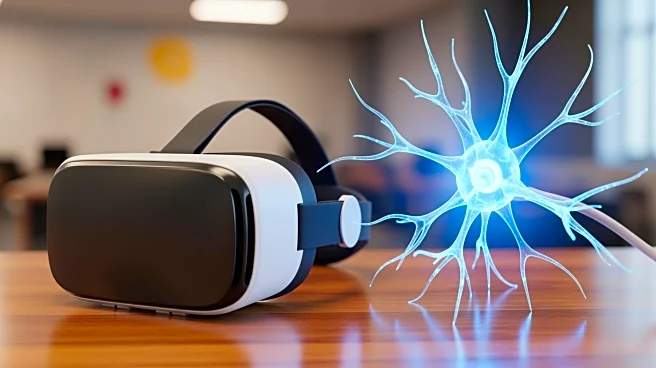
A professor from the University of Michigan has gained national recognition for pioneering the use of virtual reality (VR) technology to alleviate depression symptoms in patients with multiple sclerosis
(MS). This innovative approach diverges from traditional pharmaceutical treatments, instead utilizing immersive VR experiences to provide therapeutic benefits. The professor's work highlights the potential of integrating technology and natural environments to improve mental health outcomes for individuals with MS, a chronic illness that often includes depression as a comorbidity.
Why It's Important?
This development is significant as it represents a shift towards non-pharmaceutical interventions in mental health treatment, particularly for chronic conditions like MS. The use of VR technology could offer a new avenue for patients who may not respond well to traditional antidepressants or who prefer alternative therapies. This approach could potentially reduce the reliance on medication, decrease side effects, and improve the quality of life for MS patients. Furthermore, it underscores the growing role of technology in healthcare, opening doors for further research and application in other areas of mental health.
What's Next?
The success of this VR-based treatment could lead to broader adoption and further research into its efficacy and applications. Healthcare providers and researchers may explore similar technological interventions for other mental health conditions, potentially leading to new treatment protocols. Additionally, this recognition could attract funding and support for expanding the program, allowing more patients to benefit from this innovative therapy. Stakeholders in the healthcare and technology sectors may collaborate to enhance and refine VR applications for therapeutic use.