







What's Happening?
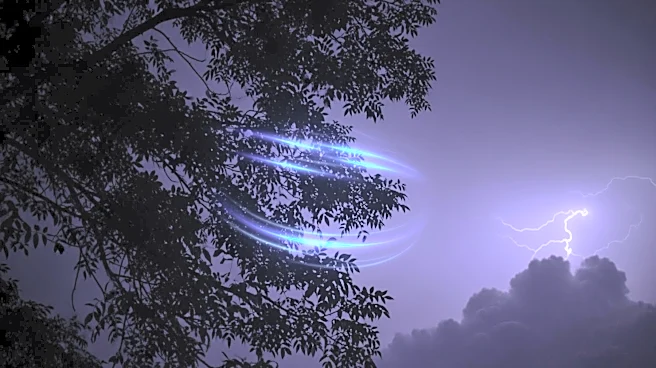
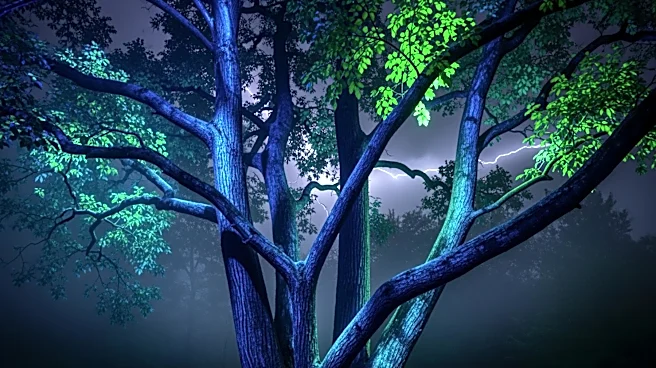
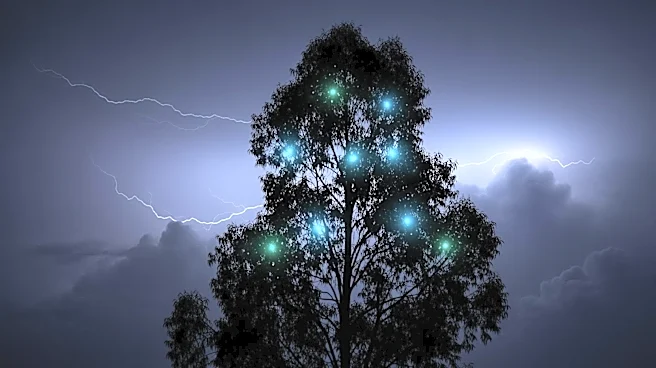
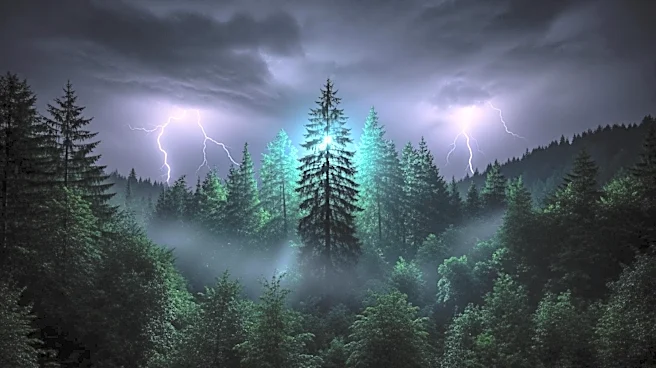
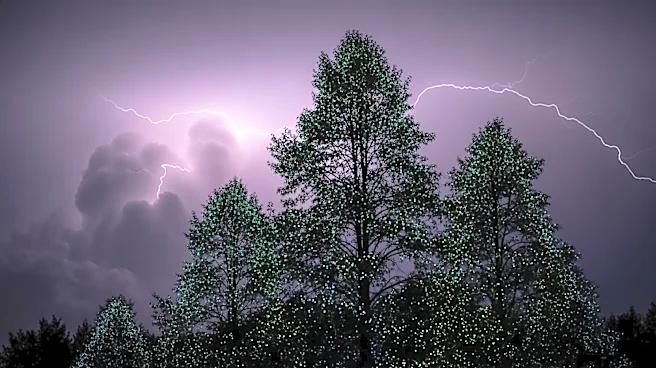
Scientists from Penn State have successfully captured a rare weather phenomenon known as corona discharge, where treetops glow during thunderstorms. This glow, caused by weak electrical sparks on the tips of leaves, has been theorized for nearly a century
but was only recently observed in the wild. The team used a specialized UV camera to detect these discharges, which are significant enough to alter the air's chemistry by producing hydroxyl radicals that clean pollutants. The discovery was made during a thunderstorm in Pembroke, North Carolina, and similar activity was recorded in other states, suggesting that this phenomenon is widespread during thunderstorms.
Why It's Important?
The discovery of corona discharges has significant implications for understanding atmospheric chemistry and forest health. These discharges help remove hydrocarbons and pollutants from the air, indicating that forests may have a self-cleaning mechanism during storms. Additionally, the electrical activity could cause subtle damage to leaves over time, affecting forest ecosystems. The phenomenon might also influence storm behavior by feeding energy back into the atmosphere. As climate change increases the frequency of thunderstorms, understanding these processes becomes crucial for predicting environmental impacts.
What's Next?
Further research is needed to explore the full implications of corona discharges on forest ecosystems and atmospheric chemistry. Scientists aim to quantify the extent of pollutant removal and assess the long-term effects on tree health. Additionally, understanding how these discharges interact with thunderstorms could improve weather prediction models. The study opens new avenues for atmospheric research, particularly in the context of increasing storm activity due to climate change.