




What's Happening?
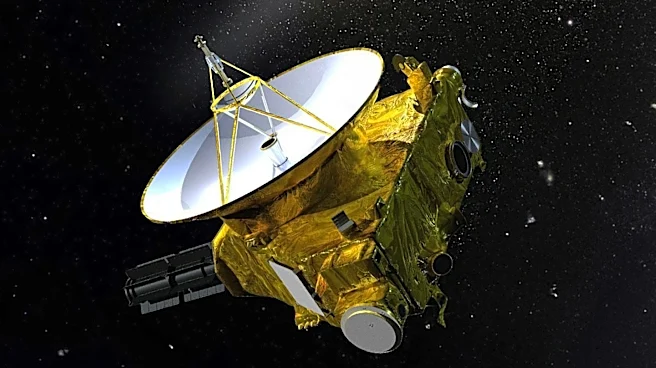
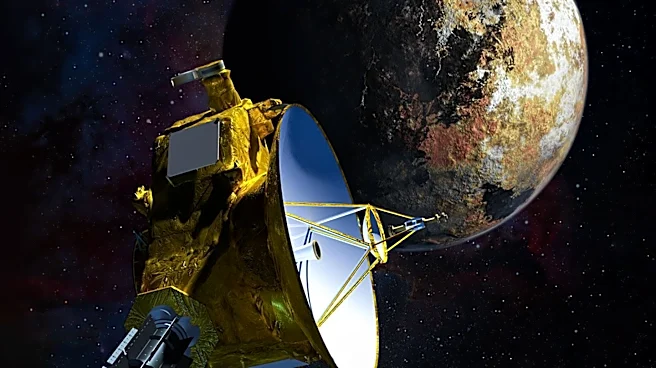
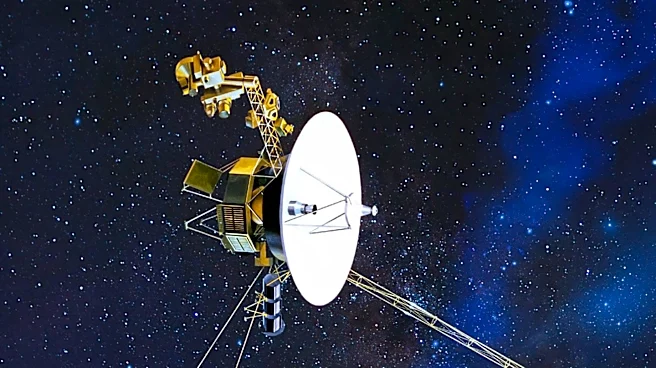
NASA's New Horizons spacecraft has successfully awakened from its longest hibernation period of nearly a year and is in good health. The spacecraft, which is currently about 5.9 billion miles from Earth, began transmitting science data from the Kuiper
Belt, a region beyond Pluto. The confirmation of its awakening was received by flight controllers at the Johns Hopkins Applied Physics Laboratory in Maryland on June 23, 2026. During its hibernation, New Horizons continued to gather data using its heliospheric plasma sensors and other instruments. The mission team is now preparing to downlink health and safety data, followed by scientific data from its instruments. The spacecraft will also conduct a series of checkouts and software upgrades to ensure continued operations as it explores the distant solar system.
Why It's Important?
The successful reactivation of New Horizons is significant for space exploration as it continues to provide valuable data from the Kuiper Belt, a largely unexplored region of the solar system. This mission enhances our understanding of the outer solar system and contributes to the study of heliospheric phenomena. The data collected by New Horizons can offer insights into the formation and evolution of the solar system, benefiting scientific research and potentially informing future space missions. The spacecraft's ability to operate at such a great distance from Earth demonstrates the advancements in space technology and the potential for long-duration missions.
What's Next?
As New Horizons resumes its operations, the mission team will focus on downlinking data and conducting instrument checkouts. The spacecraft's Alice ultraviolet spectrograph will soon begin studying hydrogen gas distribution in the outer heliosphere. The team will also continue to upgrade the ground-system software to support the spacecraft's operations. These activities are expected to continue throughout the year, ensuring that New Horizons remains a valuable asset for space exploration.