



What's Happening?
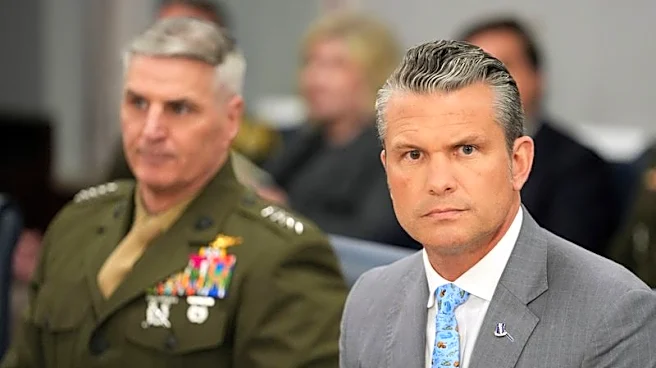
India has voiced significant concerns to the United States regarding U.S. military support for Pakistan's F-16 fleet. India's Defence Minister Rajnath Singh reportedly warned Pete Hegseth that sensitive American technology supplied to Pakistan could potentially
be accessed by China or other countries. This concern centers on the risk of advanced U.S. military technology falling into the hands of geopolitical rivals, which could have implications for regional security and the balance of power. The warning highlights India's apprehension about the long-term consequences of such military aid, particularly given the complex geopolitical dynamics in South Asia and the broader Indo-Pacific region.
Why It's Important?
This issue is critical for U.S.-India defense ties, which have been strengthening in recent years as both nations seek to counter China's growing influence. India's warning underscores its strategic anxieties about the U.S.'s dual approach to regional allies, particularly when one ally (Pakistan) has a historically complex relationship with India and a growing strategic alignment with China. Any potential leakage of sensitive U.S. military technology to China could compromise U.S. technological superiority and provide China with valuable intelligence, impacting U.S. national security interests. For India, such a scenario could exacerbate existing security challenges along its borders and undermine its defense capabilities relative to its adversaries.
What's Next?
The U.S. will likely need to address India's concerns to maintain the momentum in its strategic partnership with New Delhi. This could involve reassessing the terms of its military aid to Pakistan, implementing stricter oversight mechanisms for technology transfer, or providing assurances to India regarding the security of its F-16 technology. The dialogue between U.S. and Indian defense officials will be crucial in navigating these sensitivities. The situation could also prompt India to further diversify its defense procurement, potentially seeking advanced military technology from other global partners to reduce its reliance on any single supplier and mitigate risks associated with U.S. military aid to Pakistan.
Beyond the Headlines
The underlying tension revealed by India's warning points to the broader challenges of U.S. foreign policy in a multipolar world, where balancing alliances and managing technology proliferation risks are paramount. The potential for sensitive military technology to be compromised through third parties raises ethical and strategic questions about the long-term implications of arms sales. This incident could also influence the global arms market, as countries become more cautious about the end-use agreements and security protocols associated with advanced military hardware. Ultimately, it highlights the intricate web of international relations where military aid to one nation can have unintended and far-reaching consequences for others, particularly in regions marked by historical rivalries and emerging power dynamics.