



What's Happening?
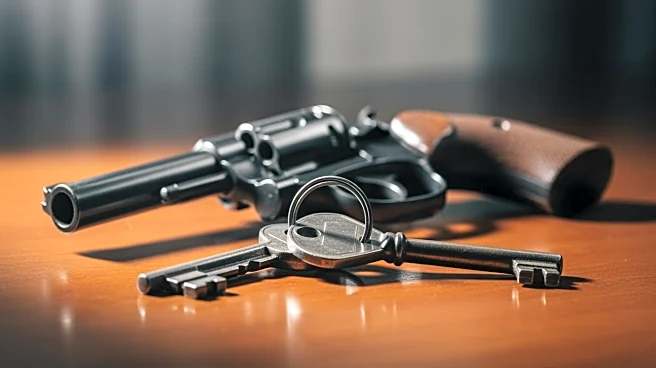
U.S. Attorney Jeanine Pirro, appointed by President Trump, has ignited controversy by threatening to jail law-abiding gun owners who bring firearms into Washington, D.C., even if they are licensed elsewhere. Her comments have drawn significant criticism
from Republicans and gun rights advocates, including the National Association of Gun Rights, which labeled her remarks as 'unacceptable and intolerable.' The issue has become a flashpoint in the ongoing debate over Second Amendment rights, particularly in light of recent events involving gun violence and federal law enforcement actions. Pirro's stance is seen as part of a broader tension within the Trump administration regarding gun control measures in the nation's capital, where local laws require firearm registration and restrict certain semiautomatic rifles.
Why It's Important?
Pirro's comments highlight a growing rift between the Trump administration and gun rights advocates, a key constituency for the Republican Party. The administration's approach to gun control in D.C. contrasts with its broader national stance, potentially alienating Second Amendment supporters. This division is further complicated by recent incidents, such as the fatal shooting of Alex Pretti by federal agents, which have intensified scrutiny on gun laws and enforcement. The backlash from prominent Republicans and gun rights groups underscores the political risks for the administration, as it navigates the complex landscape of gun rights and public safety. The controversy could influence voter turnout and political dynamics in upcoming elections, particularly among gun rights advocates.
What's Next?
The debate over gun rights in Washington, D.C., is likely to continue, with potential legislative efforts to address concealed carry reciprocity gaining momentum. Such legislation would allow gun owners with permits to carry concealed weapons across state lines, a move supported by many gun rights advocates. Republican lawmakers, including Representatives Greg Steube and Thomas Massie, have publicly opposed Pirro's comments, suggesting that further political and legal challenges may arise. The Trump administration may face increased pressure to clarify its position on gun rights, balancing federal enforcement with the expectations of its political base. Additionally, the issue could become a focal point in the midterm elections, influencing campaign strategies and voter engagement.