




What's Happening?
A virtual forum hosted by the Guam-based Pacific Centre for Island Security (PCIS) on October 23 brought together international strategists and Micronesian voices to discuss the geopolitical dynamics between the U.S. and China in the Western Pacific.
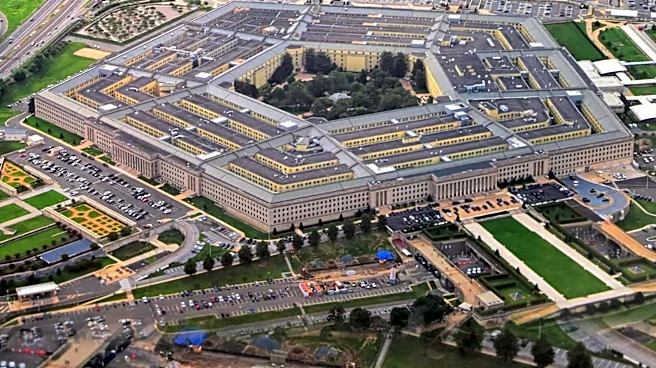
The forum focused on how island communities are navigating a surge of federal initiatives, including deep-sea mining, mobile nuclear reactors, and multi-billion-dollar base expansions. Dr. Robert Underwood, former Guam congressional delegate and PCIS Chairman, emphasized the need to center islander perspectives in policy debates often held without local participation. Dr. Kathy Jetñil-Kijiner, Climate Change Envoy for the Republic of the Marshall Islands (RMI), specifically addressed the federal push for Small Modular Reactors (SMRs) and microreactors in the Pacific, driven by Executive Order 14299, the U.S. Army’s 'Project Janus,' and the Pentagon’s 'FORTRESS' initiative. She highlighted strong opposition in the CNMI due to concerns about emergency response capacity and typhoon vulnerability, citing the Marshall Islands' history with U.S. nuclear testing and the vulnerable Runit Dome nuclear waste site. Jetñil-Kijiner argued that SMRs are too expensive, slow to build, and hazardous for small island grids compared to proven solar and wind renewables.
Why It's Important?
The discussions at the PCIS forum underscore the significant impact of U.S.-China strategic competition and associated federal initiatives on Micronesian communities. The push for SMRs in the Pacific, framed as a clean energy solution, raises critical questions about environmental justice, indigenous sovereignty, and the long-term well-being of island nations. The Marshall Islands' historical experience with nuclear testing and the ongoing challenges with the Runit Dome nuclear waste site provide a crucial context for understanding local resistance to new nuclear technologies. The debate highlights a tension between national security interests, which often prioritize military and energy independence, and the human security concerns of vulnerable island populations. The potential deployment of SMRs, while offering carbon-free energy, could introduce new risks and burdens on communities already grappling with the legacy of past nuclear activities and the immediate threats of climate change. The forum's emphasis on local consent and environmental protection challenges the traditional top-down approach to defense and energy policy in the region.
What's Next?
The ongoing federal initiatives, including the deployment of SMRs and deep-sea mining, are expected to continue in the Pacific. The opposition from Micronesian communities, as voiced by figures like Dr. Jetñil-Kijiner and CNMI Rep. Vicente Camacho Aldan, suggests that these projects will likely face continued scrutiny and resistance. The establishment of the Micronesia Security Monitor (MSM) will provide a tool for public oversight of military exercises, base construction, and other activities in the region, potentially fueling further advocacy. Future policy decisions regarding energy infrastructure and defense strategies in the Pacific will need to increasingly consider the perspectives and concerns of local island populations. The call for genuine security to include funding for judicial independence, anti-corruption mechanisms, digital data sovereignty, and environmental cleanup indicates a broader demand for a more holistic and community-centric approach to regional development and security.
Beyond the Headlines
The forum's discussions reveal deeper implications beyond immediate geopolitical rivalries and energy solutions. The concept of 'human security' as articulated by Micronesian voices challenges the conventional, state-centric view of security, advocating for an indigenous definition that prioritizes the protection of people, land, and sea. This perspective highlights the ethical dimensions of imposing large-scale federal projects on communities with limited resources and historical grievances. The debate over SMRs, for instance, is not just about energy efficiency but also about trust, accountability, and the equitable distribution of risks and benefits. The forum also touches upon the broader issue of U.S. national debt and potential military retrenchment, which could lead to shifts in funding for social services and climate adaptation in Micronesia. This suggests a long-term re-evaluation of U.S. commitments and priorities in the region, potentially impacting the economic and social fabric of these island nations.