








What's Happening?
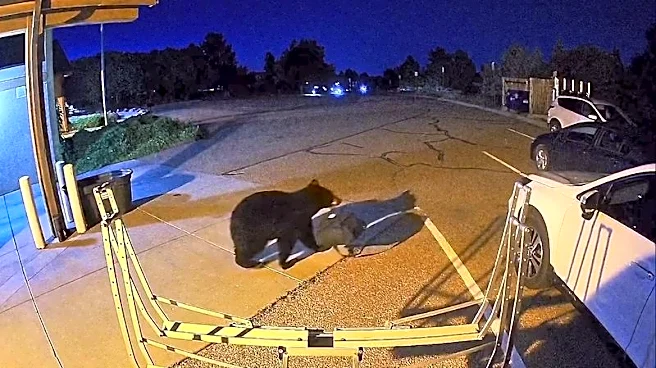
A Colorado Springs family woke up in July to find a bear in their kitchen, eating breakfast. Security camera footage from inside the home captured the bear entering the kitchen on July 21 and taking food. Nerissa England, the homeowner, stated she heard
a bang and initially thought a picture had fallen. Her 8-year-old daughter, Zara Lee, went to investigate, followed by her husband, and discovered the bear rummaging through their trash near the kitchen door. The bear had entered through a back door left open for a breeze due to hot temperatures. It consumed Flintstones vitamins left on a table before dragging the trash can outside. Zara Lee and her father successfully scared the bear away by opening the door and making noise. The family plans to keep their door shut until local bears find sufficient food and enter hibernation.
Why It's Important?
This incident highlights the increasing frequency of human-wildlife encounters in residential areas, particularly with bears, across the United States. A dry winter has led to a scarcity of natural food sources like plants, grasses, berries, and nuts, which constitute about 90% of a bear's diet. Consequently, bears are drawn to human settlements by their strong sense of smell in search of food. This trend has resulted in a record number of bear-related incidents, including property damage, and unfortunately, a rise in bear deaths due to euthanasia, vehicle collisions, shootings, and electrocutions. The situation underscores the critical need for public awareness and education on coexisting with wildlife, secure food storage, and proper waste management to mitigate conflicts and ensure both human safety and wildlife conservation.
What's Next?
Authorities and wildlife organizations will likely continue to emphasize public education campaigns on bear-proofing homes and properties, especially in areas prone to such encounters. Residents in Colorado and similar regions are advised to secure trash, avoid leaving pet food outdoors, and keep doors and windows closed, particularly during periods of natural food scarcity. Local wildlife agencies may also increase monitoring and intervention efforts for bears that become habituated to human food sources. The long-term solution involves addressing the underlying environmental factors, such as climate change impacts on natural habitats and food availability, which drive these animals into residential areas. Communities may also explore more robust zoning and development practices to minimize encroachment on wildlife corridors.
Beyond the Headlines
Beyond the immediate concern of safety and property damage, this event reflects a broader ecological challenge: the shrinking buffer between human development and wildlife habitats. As urban and suburban areas expand, natural ecosystems are fragmented, forcing animals into closer proximity with humans. This particular incident, driven by food scarcity due to environmental conditions, serves as a micro-example of how climate change and habitat degradation can directly impact human daily life. It also raises ethical questions about human responsibility in managing these interactions, balancing conservation efforts with public safety. The 'cute' factor of a bear in a kitchen quickly gives way to the serious implications of ecological imbalance and the need for sustainable coexistence strategies.