




What's Happening?
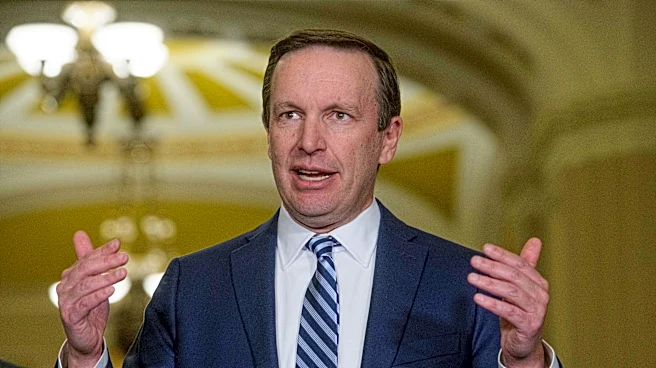
Democratic U.S. Senator Chris Murphy of Connecticut was hospitalized after experiencing a stroke. According to Allison Herwitt, the senator's chief of staff, Senator Murphy began feeling numbness in his arm on Saturday afternoon while attending his son's
hockey game. He was initially taken to a local hospital where the stroke was diagnosed. Subsequently, he was transferred to Johns Hopkins for further monitoring and treatment. Herwitt stated that Senator Murphy is responding well to treatment, is awake and alert, and doctors are encouraged by his progress, expressing optimism for a full recovery.
Why It's Important?
The hospitalization of a sitting U.S. Senator due to a stroke is a significant event that can have immediate implications for legislative activities and political stability. Senator Murphy's health status is crucial for the Democratic Party, particularly given the often-tight margins in the Senate. His absence, even temporary, could affect voting on key legislation, committee work, and the overall balance of power. The swift and transparent communication from his chief of staff regarding his condition and prognosis aims to reassure constituents and political colleagues. A full recovery, as anticipated by his doctors, would allow him to resume his duties, maintaining continuity in his representation of Connecticut and his role in national policy discussions. This event also highlights the personal health challenges that public officials can face, underscoring the demanding nature of their roles.
What's Next?
Senator Murphy will remain under medical care at Johns Hopkins for monitoring and treatment following his stroke. His chief of staff has expressed optimism for a full recovery, indicating that he is awake and alert and responding well to treatment. The immediate focus will be on his health and rehabilitation. Once he is medically cleared, he is expected to gradually resume his duties as a U.S. Senator for Connecticut. The timeline for his return to full legislative activity will depend on his recovery progress. In the interim, his office will continue to operate, and his staff will manage constituent services and legislative affairs. The Senate's legislative agenda may proceed with his temporary absence, but his return will be important for his committee assignments and voting record.
Beyond the Headlines
The health event experienced by Senator Chris Murphy brings to light the broader issue of health and wellness among public servants, whose demanding schedules and high-pressure environments can take a toll. Such incidents often prompt discussions about the support systems available to elected officials and the contingency plans in place for their temporary or permanent incapacitation. From a legislative perspective, the temporary absence of a senator, even with a positive prognosis, can underscore the fragility of legislative majorities and the importance of every vote in a closely divided Congress. It also serves as a reminder of the human element in politics, where personal health can unexpectedly intersect with public duty, potentially influencing policy debates and political dynamics.