





What's Happening?
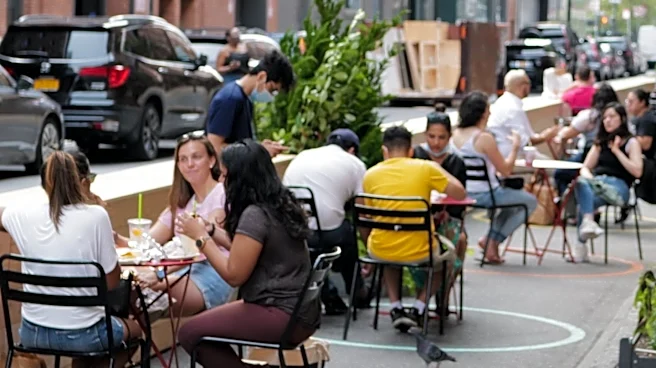
Recent closures of streateries in Columbia Heights and Mount Pleasant have caused public outcry in Washington, D.C. The District Department of Transportation (DDOT) has introduced new guidelines and fees to align the streatery program with other public space
initiatives. This change requires restaurants to undergo a lengthy process to obtain permanent permits, including design approvals, construction permits, and inspections. The Mount Pleasant pizzeria Martha Dear serves as an example, taking five months to secure a permit despite meeting criteria. The number of permitted streateries has drastically reduced from 270 to 39, with many applications pending, particularly in Georgetown. The new requirements address issues like accessibility and safety, but have led to financial and procedural challenges for restaurants.
Why It's Important?
The streatery program was initially a lifeline for restaurants during the COVID-19 pandemic, allowing them to serve customers outdoors. The new regulations, however, have imposed significant financial and logistical burdens on businesses, potentially threatening their survival. The closures and reduced number of streateries could impact the local economy, particularly in neighborhoods that relied on these outdoor dining spaces. The changes highlight the tension between regulatory compliance and business viability, raising questions about the balance between public safety and economic support for small businesses.
What's Next?
Restaurants must navigate the complex permitting process to establish permanent streateries, which could take months. The DDOT has expressed a desire to keep streateries operational, offering support through office hours and subsidized fees. However, the future of streateries in D.C. remains uncertain, with many businesses struggling to meet the new requirements. The situation may prompt further discussions between city officials and business owners to find a more sustainable solution.