





What's Happening?
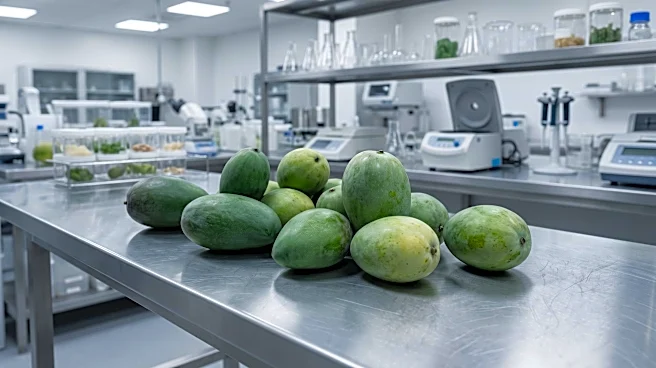
The Institute of Horticultural Research (ICAR-IIHR) in Karnataka, India, has developed advanced cryopreservation techniques to store pollen from rare mango varieties. This initiative is part of a broader effort to conserve indigenous mango genotypes,
particularly the Appemidi mangoes, which are valued for their distinct aromas and use in pickles. Comprehensive surveys have led to the collection and conservation of over 200 local Appemidi mango genotypes in the ICAR-IIHR's field gene bank. The institute is also actively characterizing these varieties and supporting efforts to secure Geographical Indication (GI) tags to protect their identity. This scientific approach complements the work of local farmers and conservationists who are establishing living gene banks and nurseries to prevent the disappearance of these culturally significant mangoes. The project aims to preserve genetic diversity against threats like climate stress, changing agricultural practices, and market preferences for standardized commercial crops.
Why It's Important?
The development of cryopreservation techniques by ICAR-IIHR is crucial for safeguarding agricultural biodiversity and ensuring food security. Many indigenous mango varieties are facing extinction due to various factors, including deforestation, climate change, and a shift towards commercially viable, uniform fruits. The loss of these varieties represents not only a reduction in genetic diversity but also a significant cultural erosion, as many are tied to local traditions, flavors, and memories. By cryopreserving pollen, ICAR-IIHR is creating a long-term genetic reservoir that can be used for future breeding programs, potentially developing disease-resistant and climate-resilient mangoes. This effort ensures that unique genetic traits are not lost, providing valuable resources for adapting agriculture to future environmental challenges and maintaining the rich heritage of local food systems. The initiative also supports local economies by preserving unique products that can be marketed under GI tags.
What's Next?
The ongoing characterization of the collected mango varieties at ICAR-IIHR will provide deeper insights into their genetic makeup and potential uses. Further efforts will likely focus on expanding the cryopreserved collection to include more endangered varieties and developing protocols for their successful regeneration. Collaboration with farmer groups, as already established in Shivamogga and Sirsi, will continue to be vital for propagating rare types and ensuring their cultivation. The pursuit of Geographical Indication (GI) tags for these unique mangoes will help protect their authenticity and potentially create new market opportunities for local farmers. Researchers also anticipate utilizing the preserved germplasm to breed new mango varieties that are better adapted to changing climatic conditions and resistant to prevalent diseases, thereby contributing to the long-term sustainability of mango cultivation.
Beyond the Headlines
The conservation efforts extend beyond mere agricultural preservation; they touch upon significant cultural and ecological dimensions. The disappearance of local mango varieties signifies a loss of traditional knowledge, culinary heritage, and the unique flavors that define regional identities. The initiative by ICAR-IIHR, alongside local conservationists and farmers, highlights a growing recognition of the intrinsic value of biodiversity, not just for economic gain but for cultural continuity and ecological resilience. This work underscores the ethical responsibility to preserve natural heritage for future generations, ensuring that the rich tapestry of local food systems remains intact. It also points to the potential for traditional varieties to offer solutions to modern agricultural challenges, such as climate change adaptation, by providing a diverse genetic pool for breeding programs.