







What's Happening?
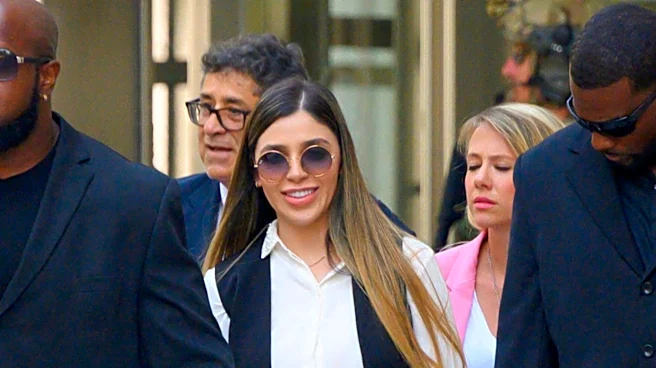
Emma Coronel Aispuro, wife of Joaquín 'El Chapo' Guzmán, recently disclosed during a live stream on the Kick platform that Banda El Recodo and Los Tucanes de Tijuana performed at the baptism of her twin daughters. The daughters, Emali Guadalupe and María
Joaquina, were born in August 2011 in Lancaster, California, granting them U.S. citizenship. Following Coronel's revelation, current vocalists of Banda El Recodo, Ricky Yocupicio and Geovanni Mondragón, addressed the claims. They stated that they do not typically inquire about the identity of those who hire them for private events and therefore cannot confirm or deny if the band performed for 'El Chapo' Guzmán's family. They emphasized that if such an event occurred, it would have involved previous members of the band, as the event took place over a decade ago. The vocalists maintained that they do not discriminate against clients and perform for anyone who can afford their services, regardless of their background.
Why It's Important?
This revelation highlights the complex intersection of celebrity, crime, and public perception in the U.S. and Mexico. The alleged performance by prominent musical groups at a private event for the family of a notorious drug lord like 'El Chapo' Guzmán, who is currently serving a life sentence in a U.S. prison, underscores the deep-seated cultural ties and financial influence that drug cartels can wield. For the musical groups involved, such associations, even if unintentional or historical, can lead to public scrutiny and potential reputational damage. It also brings to light the challenges faced by entertainment figures in vetting clients for private engagements, especially when dealing with individuals who may have illicit connections. The U.S. citizenship of Coronel's daughters, born in California, further complicates the narrative, intertwining U.S. legal and social contexts with the ongoing saga of Mexican cartel figures.
What's Next?
The statements from Banda El Recodo's vocalists suggest a stance of plausible deniability, indicating that they do not intend to further investigate or confirm the alleged performance. Emma Coronel Aispuro, who has transitioned into a model and influencer after her release from U.S. prison, continues to share aspects of her life, including plans for a bilingual series about 'El Chapo' from her perspective. This ongoing public presence could lead to further revelations or discussions about her past and connections. The incident may prompt other public figures or entertainment groups to re-evaluate their due diligence processes for private bookings, especially those with high-profile or potentially controversial clients, to avoid similar situations and public backlash.
Beyond the Headlines
The story delves into the ethical considerations for artists and public figures regarding their associations, even indirect ones, with individuals involved in criminal activities. It raises questions about the responsibility of entertainers to be aware of their clients' backgrounds and the potential implications of performing for them. Furthermore, it reflects the broader societal fascination with figures like 'El Chapo' Guzmán and their families, often blurring the lines between notoriety and celebrity. Emma Coronel's pivot to a public persona as a model and influencer, despite her past and her husband's criminal status, illustrates the evolving landscape of media and public interest, where personal narratives, even controversial ones, can find platforms and audiences. This also touches upon the cultural phenomenon of 'narco-culture' in some regions, where figures associated with drug trafficking can sometimes attain a certain level of folk hero status or influence.