


What's Happening?
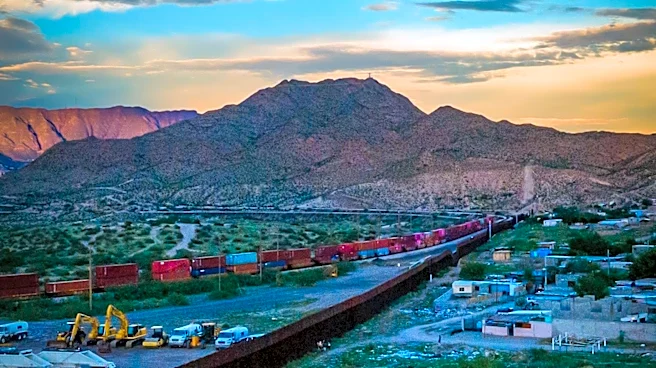
The New Mexico Office of the State Engineer has filed a lawsuit against U.S. Customs and Border Protection (CBP) and three of its contractors. The lawsuit alleges unauthorized groundwater drilling in three basins near the state's southern border: Mimbres,
Hachita, and Lower Rio Grande. According to KOAT legal expert John Day, this is one of the most direct lawsuits he can recall where the federal government is accused of 'stealing our water.' State Engineer Elizabeth Anderson emphasized her agency's commitment to protecting New Mexico's water resources, water rights holders, and water users, describing the situation as 'uncharted territory.' The lawsuit highlights that groundwater resources in these areas are 'finite' and crucial for the livelihoods of New Mexicans, including ranchers and farmers. This legal action follows a trend of states and tribal entities challenging federal border-related activities, such as a recent lawsuit by a Native community in southern Arizona against the Department of Homeland Security over tribal sovereignty interference.
Why It's Important?
This lawsuit is significant because it underscores the escalating tensions between state and federal authorities over resource management, particularly water, in border regions. The arid climate of New Mexico makes water an exceptionally valuable and contested resource. The alleged unauthorized drilling by CBP and its contractors directly impacts the availability of water for local communities, including ranchers and farmers, potentially threatening their economic stability and way of life. The case also highlights a broader pattern of states and tribal entities asserting their rights against federal actions related to border security, suggesting a growing pushback against federal overreach. The outcome of this lawsuit could set a precedent for how federal projects, especially those concerning national security like border infrastructure, must navigate state-level environmental regulations and resource rights. It brings to the forefront the conflict between federal mandates and local resource protection, with potential implications for environmental policy and intergovernmental relations across the U.S. southern border.
What's Next?
The lawsuit will now proceed before a federal judge, who will determine whether the case can move forward. KOAT legal expert John Day noted that the matter could potentially reach the Supreme Court, indicating a long and complex legal battle ahead. The federal government has not yet issued a response to New Mexico's allegations. This legal process will likely involve extensive arguments regarding federal authority versus state sovereignty over natural resources. Depending on the court's decision, CBP and its contractors may be compelled to cease drilling activities, pay damages, or implement new procedures for water usage that comply with state regulations. The case's progression will be closely watched by other states and tribal entities along the U.S. southern border, as it could influence their strategies in challenging federal actions that impact local resources. The resolution of this dispute will have lasting implications for environmental governance and the balance of power between state and federal governments.
Beyond the Headlines
Beyond the immediate legal and environmental implications, this lawsuit touches upon deeper issues of federalism and resource justice in the United States. The contention over water rights in the context of border security highlights the ethical dilemma of prioritizing national security measures over the environmental and economic well-being of local populations. The 'politically charged realm' of border wall construction, as described by John Day, often overlooks the specific impacts on communities and ecosystems. This case could force a re-evaluation of how federal agencies conduct operations that affect state-controlled resources, potentially leading to more collaborative approaches or stricter oversight. It also brings to light the vulnerability of marginalized communities, such as those in arid border regions, whose access to essential resources can be jeopardized by large-scale federal projects. The outcome may influence public discourse on the environmental costs of border security and the need for more equitable resource management policies.