



What's Happening?
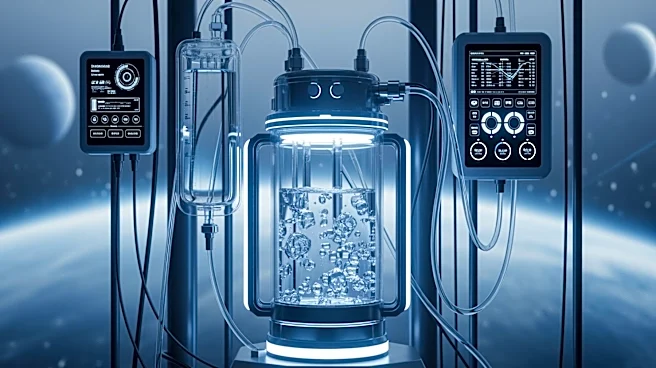
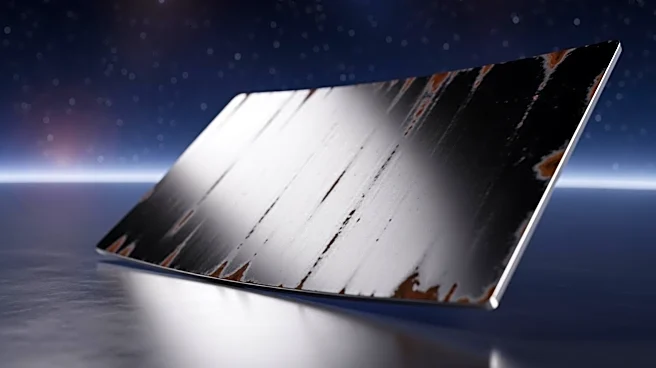
NASA is preparing to conduct a groundbreaking experiment to test the flammability of materials on the lunar surface. This initiative, known as the Flammability of Materials on the Moon (FM2), aims to understand how fire behaves in the Moon's partial gravity
environment. Historically, NASA has studied fire in microgravity aboard spacecraft, but this new experiment will extend those studies to the Moon. The standard test, NASA-STD-6001B, evaluates material safety by exposing it to a six-inch flame. However, this test is conducted under Earth's gravity, which may not accurately reflect conditions on the Moon. The experiment will involve burning solid fuel samples in small, habitable atmospheres on the Moon, with a planned launch date in late 2026. The results are expected to provide critical data for ensuring the safety of future lunar habitats.
Why It's Important?
Understanding how fire behaves in the Moon's partial gravity is crucial for the safety of future lunar missions. Materials that are considered non-flammable on Earth may behave differently in the Moon's environment, potentially posing a risk to astronauts. The experiment will help NASA develop safer materials for use in lunar habitats, where an open fire could be disastrous. This research is vital as NASA plans to establish a permanent presence on the Moon, and ensuring the safety of astronauts is a top priority. The findings could also influence the design of spacecraft and habitats for other space missions, including those to Mars.
What's Next?
NASA plans to conduct the FM2 experiment by late 2026, using cameras, radiometers, and oxygen sensors to monitor the behavior of fire on the Moon. The data collected will be compared to previous studies conducted in drop towers and sounding rockets, which simulate partial gravity environments. The results will inform the development of fire safety protocols for lunar habitats and spacecraft. As NASA continues to plan for long-term lunar missions, understanding material flammability in space environments will be essential for ensuring the safety and success of these missions.
Beyond the Headlines
The experiment highlights the unique challenges of space exploration, where conditions differ significantly from those on Earth. The potential for increased flammability in partial gravity environments underscores the need for rigorous testing and safety measures. This research could lead to advancements in material science, with implications for both space and terrestrial applications. Additionally, the study of fire behavior in space environments may contribute to broader scientific understanding of combustion processes.