



What's Happening?
In a significant development, Libya's Government of National Unity in Tripoli and the Tobruk-based Libyan National Army are participating together in the Turkish Efes-2026 military exercise. This marks the second time in recent weeks that these rival
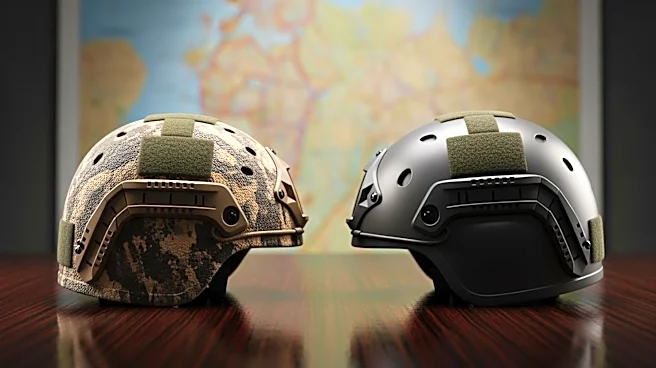
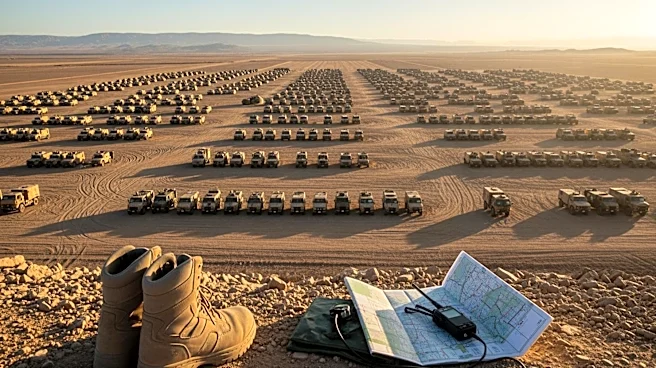
factions have engaged in a joint multinational exercise, indicating a move towards reconciliation. The exercise, coordinated by the Aegean Army Command, includes both a Computer-Assisted Command Post Phase and a live phase, with activities taking place in Istanbul and Izmir. The Turkish Ministry of National Defense has highlighted this collaboration as a critical milestone towards achieving a 'single and unified Libya.' The exercise involves 331 personnel from eastern Libya and 177 from western Libya, along with the fast-attack craft Shafak. This initiative is part of Turkey's 'One Army, One Libya' approach, aimed at fostering unity and stability across Libya.
Why It's Important?
The joint participation of Libya's rival factions in the Efes-2026 exercise is a significant step towards national reconciliation and stability. This collaboration could pave the way for a unified military structure in Libya, which has been divided since the fall of Muammar Gaddafi in 2011. A unified military could enhance Libya's internal security and stability, potentially leading to improved governance and economic development. For the international community, particularly countries involved in the exercise like the United States and Turkey, a stable Libya could mean reduced regional instability and a decrease in migration pressures. Additionally, this development could influence the geopolitical dynamics in the Mediterranean region, where Libya's strategic location is of considerable interest to global powers.
What's Next?
The continuation of joint military exercises and the involvement of international stakeholders suggest that further steps towards Libyan unity are likely. The success of these exercises could lead to more comprehensive military and political agreements between the factions. International actors, particularly those involved in the exercises, may continue to support these efforts diplomatically and financially. The progress made in these exercises could also encourage other divided nations to consider similar reconciliatory approaches. However, the path to a fully unified Libya will require sustained commitment from both internal and external stakeholders, addressing not only military but also political and economic challenges.