
What's Happening?
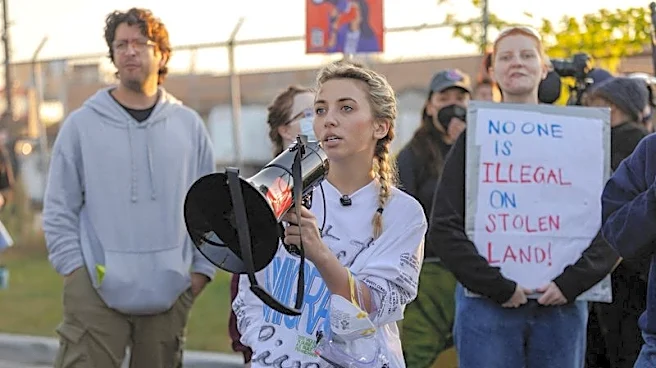
The Illinois Accountability Commission has completed its investigation into Operation Midway Blitz, an immigration enforcement effort conducted in the Chicago area last fall. The commission's final report,
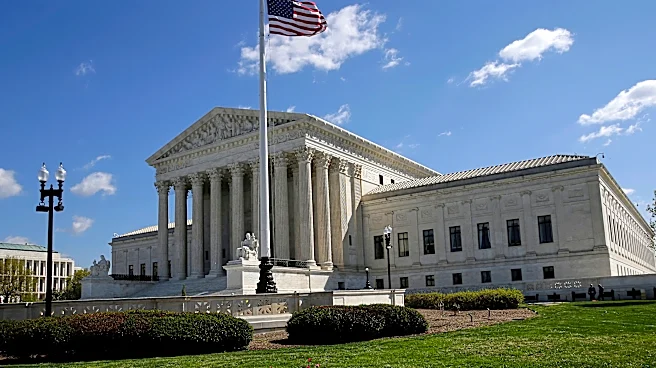
which was compiled after several months of testimony, has been submitted to local law enforcement for further investigation and potential prosecution. This operation was part of a broader effort to hold Immigration and Customs Enforcement (ICE) accountable for its actions in the region. In related news, former Illinois House Speaker Michael Madigan's attempt to overturn his corruption conviction was unsuccessful, as a federal appeals court upheld his more than seven-year sentence. Additionally, the Illinois Senate Democrats have decided not to advance a constitutional amendment aimed at strengthening minority representation protections during redistricting, following a recent U.S. Supreme Court decision on voting rights.
Why It's Important?
The conclusion of the Illinois Accountability Commission's investigation into ICE's operations highlights ongoing concerns about immigration enforcement practices and their impact on communities. The findings could lead to legal actions against individuals or entities involved in the operation, potentially influencing future immigration enforcement strategies. The decision by the Illinois Senate Democrats to halt the constitutional amendment process reflects the complex interplay between state and federal decisions on voting rights, which could affect minority representation in future redistricting efforts. Meanwhile, the upholding of Michael Madigan's conviction underscores the judiciary's role in addressing political corruption, which remains a significant issue in Illinois politics.
What's Next?
Local law enforcement agencies will review the commission's findings to determine if any legal actions are warranted against those involved in Operation Midway Blitz. This could lead to prosecutions or policy changes within ICE or other related agencies. The decision not to pursue the constitutional amendment may prompt further discussions among Illinois lawmakers about alternative ways to protect minority representation in redistricting. The political landscape in Illinois may continue to evolve as stakeholders respond to these developments, particularly in light of the upheld conviction of a prominent political figure like Michael Madigan.