


What's Happening?
The United States is reassessing its stance on the International Energy Agency (IEA), questioning whether the agency has shifted too far from its original mandate of ensuring energy security towards advocating for climate change policies. This comes as global
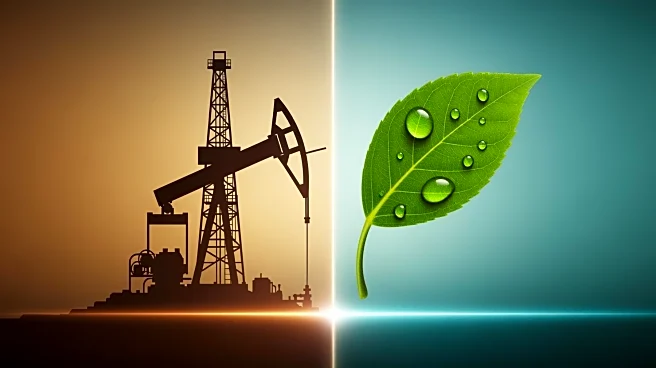
energy policy faces significant strain, with Europe grappling with the high costs of meeting climate targets while maintaining economic stability. The IEA, initially established to safeguard energy supply stability, has become a prominent voice in promoting net-zero pathways and renewable energy deployment. Critics argue that the agency's focus on long-term decarbonization may overlook immediate supply needs, while supporters believe that preparing for the energy transition is economically prudent. This debate highlights a broader divide in energy policy, where energy security and transition are increasingly seen as competing priorities.
Why It's Important?
The U.S. questioning of the IEA's direction underscores a critical moment in global energy policy, where the balance between energy security and climate goals is under scrutiny. If the U.S. distances itself from the IEA, it could signal a shift in prioritizing energy security over climate advocacy, potentially affecting international cooperation on energy transition. This development is significant as it may influence global energy markets, investment flows, and policy decisions. For Europe, the rising costs of climate resilience pose challenges in maintaining economic stability while pursuing ambitious climate targets. The situation is further complicated in developing nations, where energy access and economic growth remain pressing concerns, making rapid decarbonization financially and politically challenging. The divergence in energy policy approaches could lead to increased costs and slower deployment of energy projects, affecting global supply chains and market stability.
What's Next?
The future of global energy policy will likely involve navigating the complex interplay between energy security and climate goals. The U.S. may need to clarify its position on the IEA and its role in international energy cooperation. Europe will continue to face pressure to balance climate resilience with economic stability, requiring sustained public investment in grid expansion, renewable deployment, and infrastructure hardening. Developing nations will need to address energy access and affordability while considering decarbonization pathways. The outcome of these policy decisions will shape global energy markets, investment strategies, and the pace of the energy transition. Stakeholders, including governments, businesses, and civil society, will need to engage in dialogue to find common ground and ensure a stable and sustainable energy future.
Beyond the Headlines
The current energy policy debate reflects deeper issues of political divergence and economic priorities. The fragmentation in energy policy approaches could lead to higher risk premiums and increased costs for energy projects, affecting global supply chains and market dynamics. The challenge lies in aligning energy security and climate goals to reduce costs and enhance reliability. The situation also highlights the need for regulatory stability and competitive returns to attract capital investment. As the energy transition continues, the focus will be on finding a balance between technological innovation, policy alignment, and economic realities to achieve sustainable energy solutions.