







What's Happening?
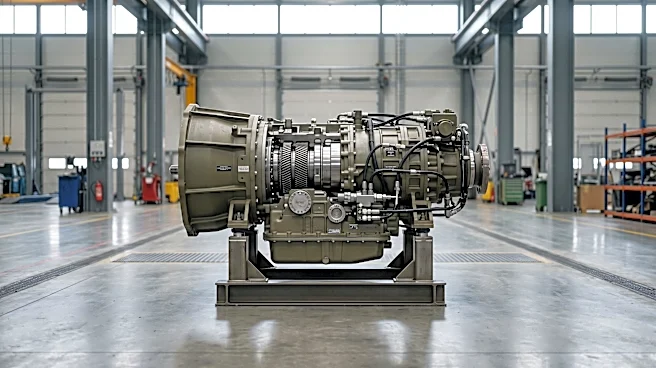
RENK America, a provider of mobility solutions for military vehicles, has announced its collaboration with BAE Systems and Forterra to advance autonomous capabilities for the U.S. Army’s Armored Multi-Purpose Vehicle (AMPV). This initiative centers on RENK America’s
HMPT transmission “drive-by-wire (DBW)” system, which is crucial for autonomous vehicle operation. The DBW system, integrated with Forterra’s AutoDrive, maintains the existing transmission footprint and requires only a plug-and-play upgrade without significant changes to the vehicle’s architecture. The Autonomous AMPV made its public debut at the Association of the U.S. Army (AUSA) annual conference in Washington, D.C., with an initial demonstration scheduled for February 2027. This effort is part of BAE Systems’ rapid capability kit initiative, aimed at accelerating the deployment of advanced technologies and enhancing mission readiness across the U.S. Army’s vehicle fleet. RENK America’s HMPT Transmission is currently used in 100% of the U.S. Army’s medium tracked vehicle fleet.
Why It's Important?
This development is significant for the U.S. Army as it introduces advanced autonomous capabilities to its critical vehicle fleet, potentially enhancing operational efficiency and soldier safety. By leveraging existing and trusted HMPT transmissions, the collaboration aims to accelerate technological deployment without incurring unnecessary risks or requiring extensive redesigns. The ability to easily deploy autonomous features to other platforms, such as the Bradley Fighting Vehicle (BFV), M109 Paladin, and M270 Multiple Launch Rocket System (MLRS), signifies a broader impact on the Army's overall modernization efforts. This move could lead to more agile and responsive military operations, reducing human exposure to hazardous environments and optimizing logistical processes. For RENK America, BAE Systems, and Forterra, this collaboration solidifies their roles as key innovators in defense technology, potentially opening doors for further contracts and advancements in military autonomy.
What's Next?
Following the public debut at the AUSA conference, an initial demonstration of the Autonomous AMPV is planned for February 2027. This demonstration will likely showcase the practical applications and effectiveness of the drive-by-wire system in a real-world setting. If successful, the rapid capability kit initiative could see broader implementation across the U.S. Army’s medium tracked vehicle fleet, extending autonomous capabilities to other platforms equipped with RENK America’s HMPT transmission. Future developments may include further integration of AI and machine learning to enhance autonomous decision-making and adaptability in diverse operational environments. The success of this program could also influence the development and adoption of autonomous technologies in other branches of the U.S. military and potentially allied forces.
Beyond the Headlines
The introduction of autonomous capabilities in military vehicles like the AMPV raises profound ethical and strategic questions. While autonomy can enhance mission effectiveness and reduce human casualties, it also necessitates careful consideration of accountability in combat situations and the potential for algorithmic bias. The long-term implications include a shift in military doctrine, training protocols, and the very nature of warfare. This technological leap could also spur a new arms race in autonomous military systems, requiring international discussions on regulations and ethical guidelines. Furthermore, the reliance on advanced software and hardware for autonomous operations highlights the increasing importance of cybersecurity in defense, as these systems could become targets for sophisticated cyberattacks. The development underscores a broader trend towards integrating cutting-edge commercial technologies into military applications, blurring the lines between civilian and defense innovation.