


What's Happening?
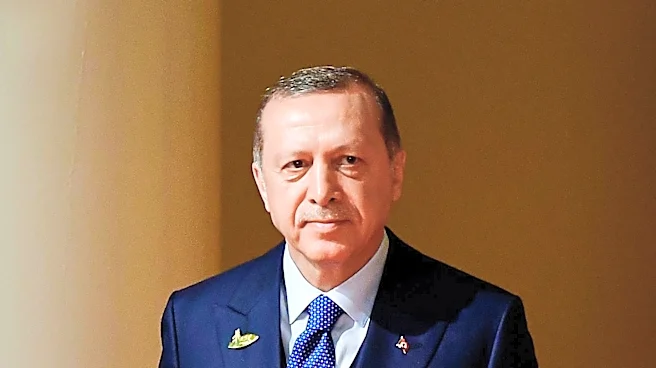
Turkish President Recep Tayyip Erdogan, accompanied by First Lady Emine Erdogan, arrived in Seoul, South Korea, on November 2, 2026, for a state visit. The primary objectives of this visit are to advance negotiations for Türkiye’s planned second nuclear
power plant and to expand economic cooperation with South Korea. President Erdogan is scheduled to meet with South Korean President Lee Jae Myung to discuss bilateral relations, regional and global developments, and agreements aimed at strengthening cooperation. Türkiye is considering South Korea as a potential partner for its nuclear power plant in Sinop on the Black Sea coast, seeking to enhance its nuclear energy capacity. Preliminary feasibility studies have been conducted with South Korea’s Korea Electric Power Corp. (KEPCO), and the proposed plant remains in the development stage, with no final partner or reactor technology yet selected. The site received regulatory approval in April 2024. The Turkish delegation includes Foreign Minister Hakan Fidan, Energy and Natural Resources Minister Alparslan Bayraktar, Defense Minister Yasar Guler, and Industry and Technology Minister Mehmet Fatih Kacir.
Why It's Important?
This visit is significant for Türkiye's energy independence and economic diversification goals. By potentially partnering with South Korea on a second nuclear power plant, Türkiye aims to reduce its reliance on fossil fuels and enhance its energy security. The selection of a partner for such a large-scale project involves substantial financial investment and technological transfer, which could have long-term economic implications for both nations. For South Korea, securing this partnership would bolster its position as a global leader in nuclear technology exports and provide a significant economic boost. Beyond nuclear energy, the discussions on expanding cooperation in defense, semiconductors, robotics, and artificial intelligence highlight a strategic alignment between the two countries. This collaboration could lead to joint production ventures, increased trade, and technological advancements, fostering economic growth and creating new job opportunities in both Türkiye and South Korea. The push for a more balanced trade structure, with a target of $15 billion, indicates a mutual desire for deeper economic integration and a more equitable distribution of trade benefits.
What's Next?
President Erdogan's visit is scheduled to conclude on November 4, with a key meeting with South Korean President Lee Jae Myung on November 3. During this meeting, further discussions on the nuclear power plant project, economic cooperation, and strategic partnerships are expected to take place. Türkiye will continue to evaluate various factors, including power generation costs, financing arrangements, and potential economic benefits, before making a final decision on the nuclear plant partner. Türkiye is also engaging in discussions with other countries, assessing all options in line with its national interests. The two countries are also expected to sign agreements to strengthen bilateral ties across various sectors. The ongoing preliminary feasibility studies with KEPCO will likely progress, and a memorandum of understanding on nuclear energy cooperation, signed during President Lee's visit to Türkiye last year, will guide future steps. The visit also sets the stage for potential increased South Korean investment in Türkiye's transportation and logistics infrastructure, particularly given global energy market and trade route risks.
Beyond the Headlines
The pursuit of a second nuclear power plant by Türkiye, following the ongoing construction of its first plant by Russia's Rosatom, underscores a broader strategic shift towards nuclear energy as a cornerstone of its long-term energy policy. This move reflects a global trend among nations seeking to diversify their energy mix and reduce carbon emissions. The emphasis on defense, semiconductors, AI, and robotics cooperation with South Korea suggests a deeper strategic partnership beyond traditional trade, aiming for technological self-sufficiency and innovation. The historical 'blood-forged' friendship, referencing Turkish troops in the Korean War, provides a strong diplomatic foundation for these ambitious economic and technological collaborations. This visit could also influence regional power dynamics, as Türkiye strengthens its ties with East Asian economic and technological powerhouses, potentially diversifying its international partnerships and reducing reliance on traditional Western alliances. The call for South Korean investment in Türkiye's transportation and logistics infrastructure, particularly in light of global trade route vulnerabilities, highlights Türkiye's ambition to become a critical hub connecting Asia and Europe.