




What's Happening?
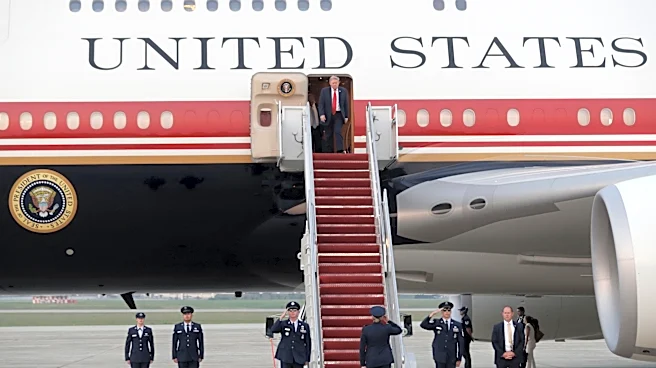
The Trump administration is facing backlash following a subpoena issued in connection with a national security leak investigation. The leak, reported by The New York Times, involved details about the president's travel arrangements on Air Force One. The Justice
Department's actions, including subpoenaing phone records of Times reporters and their family members, have raised concerns about press freedom and privacy. Critics argue that these measures contradict President Trump's previous commitments to restoring free speech and ending federal censorship.
Why It's Important?
The subpoena issued by the Trump administration highlights ongoing tensions between government actions and press freedom. This development raises questions about the balance between national security and the rights of journalists to report on government activities. The administration's actions may have a chilling effect on investigative journalism, potentially deterring reporters from pursuing stories that could be deemed sensitive. The situation underscores the importance of protecting press freedom as a cornerstone of democracy, especially in the context of national security concerns.
What's Next?
The controversy surrounding the subpoena may lead to increased scrutiny of the Trump administration's approach to press freedom and transparency. Legal challenges could arise, questioning the administration's actions and their implications for journalists' rights. There may be calls for legislative measures to safeguard press freedom and ensure that government actions do not infringe on journalists' ability to report freely. The situation could also prompt broader discussions about the role of the media in holding government accountable.
Beyond the Headlines
The Trump administration's actions could have broader implications for the relationship between government and media. This development may contribute to a growing distrust of government intentions regarding transparency and accountability. The situation also highlights the ethical considerations involved in balancing national security with the rights of journalists and the public's right to know. The case may serve as a catalyst for discussions about the need for stronger protections for press freedom in the face of government scrutiny.