




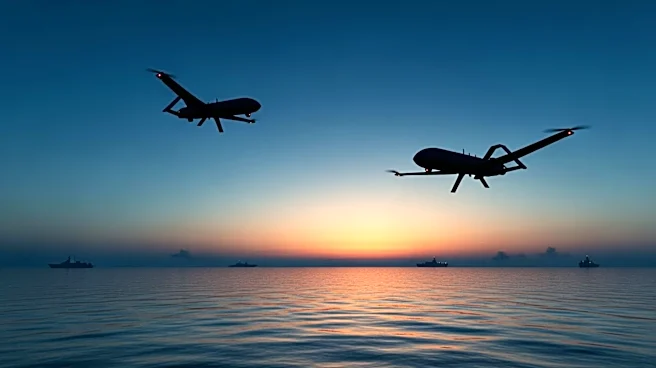

What's Happening?
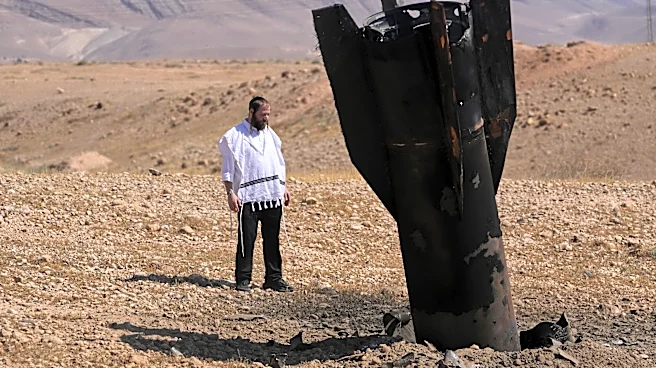
The U.S. military launched airstrikes against Iran after an Army helicopter crashed near the Strait of Hormuz, an incident President Trump attributed to Iranian actions. In response, Iran conducted attacks in Bahrain and Kuwait and targeted a U.S. air base
in Jordan. The conflict has escalated tensions in the region, affecting global energy prices and the economy. The U.S. Central Command stated that the strikes targeted Iranian air defense and surveillance sites as a proportional response to recent attacks on U.S. forces. The incident further strains a fragile ceasefire between the U.S. and Iran, with both sides exchanging fire in recent days.
Why It's Important?
The escalation of military actions between the U.S. and Iran has significant implications for international relations and global economic stability. The Strait of Hormuz is a critical chokepoint for global oil shipments, and disruptions in this area can lead to increased energy prices worldwide. The ongoing conflict also complicates diplomatic efforts to reach a lasting peace agreement, with both nations taking hard-line positions. The situation poses risks to regional security and could potentially draw in other countries, further destabilizing the Middle East.
What's Next?
The immediate future may see continued military engagements as both the U.S. and Iran have vowed to respond to each other's actions. Diplomatic efforts, led by countries like Pakistan, are ongoing to mediate a resolution, but progress remains uncertain. The international community will likely increase pressure on both nations to de-escalate and return to negotiations. The U.S. military's use of advanced technology, such as drone boats for rescue operations, highlights a shift in military tactics that could influence future engagements.