




What's Happening?
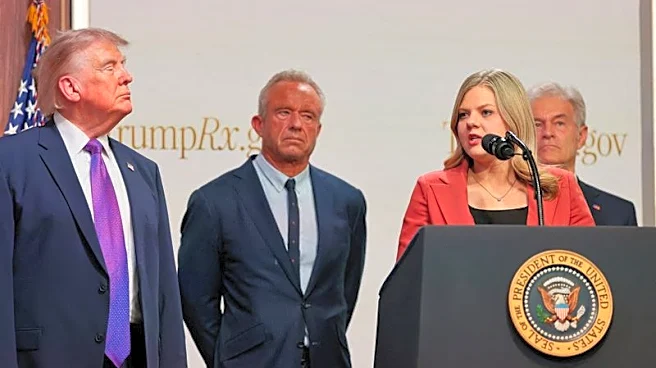
The Senate Committee on Health held a confirmation hearing for President Trump's third nominee for Surgeon General, Dr. Nicole Saphier, a radiologist. This marks the third attempt by the Trump administration to fill the position of the nation's top doctor,
which has been vacant since January 2025. Dr. Saphier, a former Fox News Channel contributor, faced questioning from senators, particularly regarding her views on vaccines. Republican Senator Bill Cassidy pressed her on the debunked link between vaccines and autism, specifically the MMR vaccine. Dr. Saphier stated she has not seen reputable evidence linking vaccines to autism and affirmed that childhood vaccines do not cause autism, also supporting the MMR vaccine as the best tool for combating infections and creating herd immunity. Other nominees considered during the hearing included Chris Klomp for Deputy Secretary of HHS and Dr. Timothy Westlake for Assistant Secretary for Mental Health and Substance Use.
Why It's Important?
The confirmation of a Surgeon General is critical for providing authoritative public health guidance and leadership in the U.S. The prolonged vacancy and multiple failed nominations highlight the political challenges in filling key health positions. Dr. Saphier's confirmation hearing, particularly the focus on vaccine views, underscores the ongoing public health debates and the importance of scientific consensus in government roles. A confirmed Surgeon General can play a vital role in addressing national health crises, promoting public health initiatives, and communicating essential health information to the public. The scrutiny over her stance on vaccines reflects concerns about potential influences on public health policy and the need for a leader who can uphold evidence-based medicine, especially in an era of misinformation.
What's Next?
Following the confirmation hearing, the Senate Committee on Health will decide whether to advance Dr. Nicole Saphier's nomination to the full Senate for a vote. Given the previous difficulties in confirming a Surgeon General, the outcome of this nomination remains uncertain, though Dr. Saphier's nomination has reportedly faced less opposition than her predecessors. If confirmed, Dr. Saphier would assume the role of Surgeon General, leading public health initiatives and serving as the primary spokesperson on health matters for the U.S. government. The other nominees, Chris Klomp and Dr. Timothy Westlake, will also await committee and full Senate votes for their respective positions within the Department of Health and Human Services. The administration's ability to fill these roles will impact its capacity to implement health policies and respond to public health challenges.
Beyond the Headlines
The repeated struggles to confirm a Surgeon General, coupled with the intense questioning on vaccine-related topics, reveal deeper societal and political divisions surrounding public health and scientific authority. The role of the Surgeon General is not merely administrative; it carries significant moral and scientific weight, influencing public trust in health institutions. The emphasis on Dr. Saphier's past media contributions and her stance on controversial health topics reflects a broader trend where scientific expertise is often scrutinized through a political lens. This situation highlights the challenge of maintaining a non-partisan, evidence-based approach to public health leadership in a highly polarized environment, potentially impacting the effectiveness of future public health campaigns and the nation's preparedness for health crises.