






What's Happening?
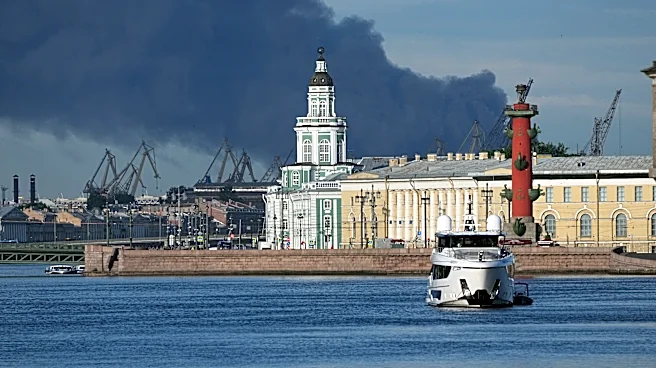
Ukrainian drones launched a significant attack on St. Petersburg and its surrounding areas, marking the second such incident in recent days. This escalation follows Russian President Vladimir Putin's rejection of peace talks proposed by Ukrainian President Volodymyr
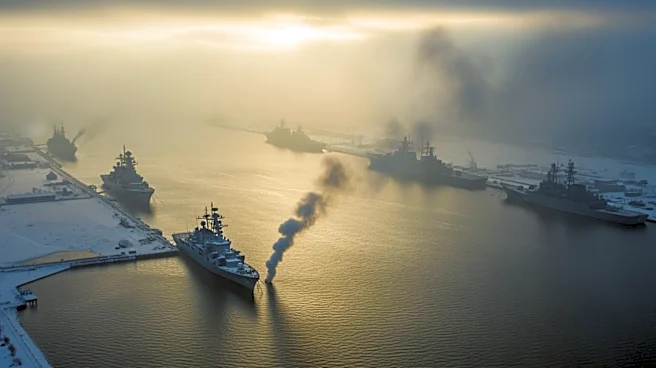
Zelenskyy. The attack coincided with the conclusion of the St. Petersburg International Economic Forum. Local authorities reported that air defenses intercepted 141 drones, and residents were advised to remain indoors due to potential disruptions. The nearby island of Kronstadt, home to Russia's Baltic Fleet, was also targeted, resulting in a fire. The Ukrainian Security Service claimed responsibility, stating the operation weakened the Baltic Fleet by hitting missile and ammunition arsenals. The Russian Defense Ministry reported intercepting a total of 376 Ukrainian drones across various regions, including Belgorod, Bryansk, and Crimea.
Why It's Important?
The drone strikes on St. Petersburg, a significant Russian city and President Putin's hometown, represent a bold move by Ukraine, highlighting the ongoing conflict's intensity. This development underscores the strained relations between the two nations and the potential for further escalation. The attacks have disrupted a major international economic forum, indicating the conflict's broader economic implications. President Zelenskyy described the strikes as a 'just response' to Russian aggression, emphasizing Ukraine's resolve. The situation poses challenges for Russia, as it faces increasing pressure both domestically and internationally. The strikes also highlight the vulnerability of Russian infrastructure to Ukrainian military capabilities, potentially influencing future military and diplomatic strategies.
What's Next?
In response to the attacks, NATO has initiated operations to bolster defenses in Sweden and Finland, reflecting the alliance's commitment to supporting its members and countering Russian aggression. President Zelenskyy is scheduled to meet with European leaders, including British Prime Minister Keir Starmer and French President Emmanuel Macron, to discuss further support for Ukraine. These discussions may lead to increased military and economic aid for Ukraine. The ongoing conflict and recent developments could prompt further international diplomatic efforts to mediate peace, although President Putin's current stance suggests a challenging path ahead. The situation remains fluid, with potential for further military actions and diplomatic negotiations.