




What's Happening?
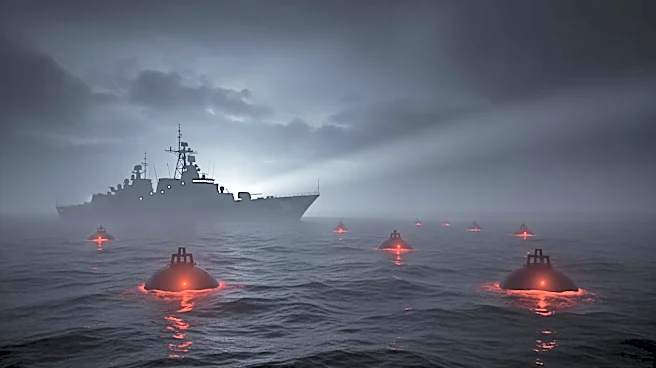
The U.S. Navy has been instructed to engage and destroy any Iranian speedboats suspected of laying mines in the Strait of Hormuz during an ongoing ceasefire. This directive comes as part of a broader strategy to maintain a blockade on Iranian ports, as announced
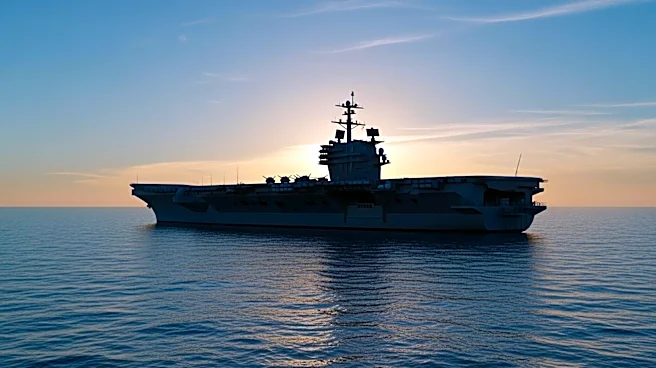
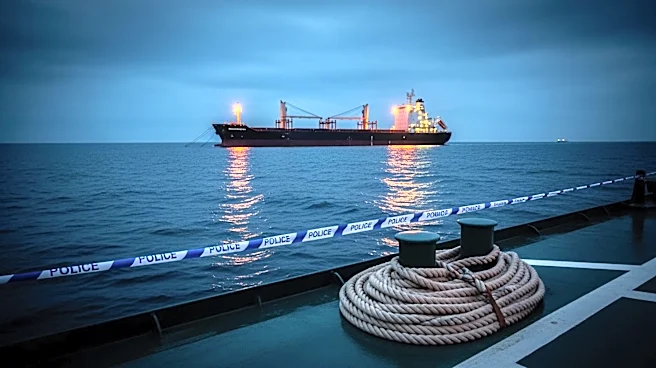
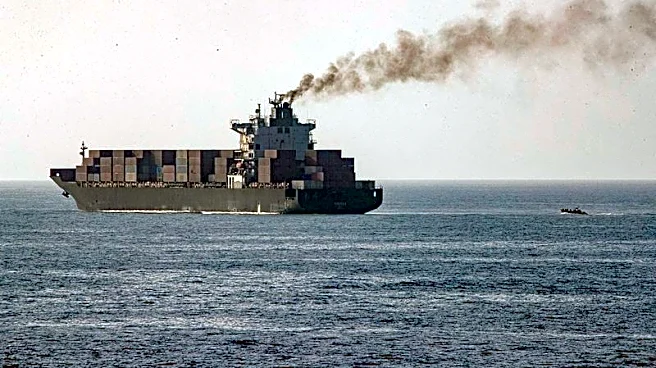
by Defense Secretary Pete Hegseth. The U.S. Central Command has confirmed the deployment of three aircraft carriers in the Middle East, marking a significant military presence in the region. The blockade aims to pressure Iran by restricting its naval operations, with the U.S. military prepared to use lethal force if necessary. The operation has already resulted in the interdiction of multiple vessels, including the boarding of an Iranian container ship and a tanker carrying sanctioned oil.
Why It's Important?
The U.S. military's actions in the Strait of Hormuz are critical due to the strategic importance of this waterway for global oil transportation. The blockade and potential military engagements could escalate tensions in the region, affecting international trade and energy markets. The U.S. aims to leverage military pressure to bring Iran to the negotiating table, but this approach risks prolonging the conflict and increasing regional instability. The situation underscores the delicate balance between military action and diplomatic efforts in addressing international disputes.
What's Next?
The continuation of the blockade and potential military engagements could lead to further diplomatic and military responses from Iran and its allies. The U.S. has indicated that the blockade will persist until Iran submits a new proposal for negotiations. The international community, particularly countries reliant on oil transit through the Strait of Hormuz, may push for a diplomatic resolution to prevent further disruptions. The U.S. military's readiness to engage Iranian vessels suggests a prolonged period of heightened tensions in the region.