






What's Happening?
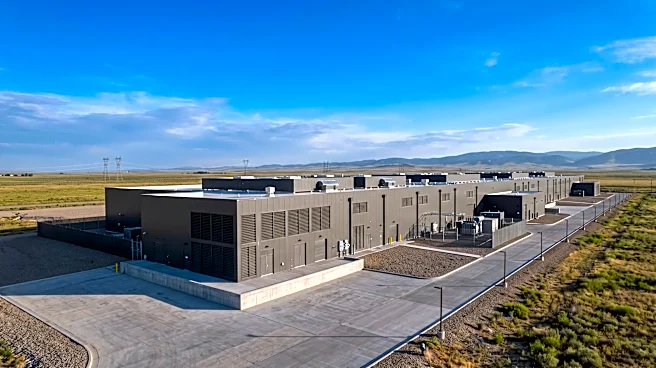
The development of artificial intelligence (AI) infrastructure in the U.S. is encountering significant local opposition, particularly concerning the construction of data centers. This resistance is highlighted by a Washington Free Beacon report investigating
activist campaigns in Prince George's County, Maryland, and commentary from Kevin O'Leary of Shark Tank regarding opposition to his proposed Stratos Project data center in Box Elder County, Utah. These local battles are centered on issues such as energy consumption, water usage, and land allocation, which are becoming intertwined with national political discussions and congressional oversight. The broader context for these developments is the ongoing global tech race, where AI infrastructure plays a crucial role in national technological advancement and competitiveness.
Why It's Important?
The local opposition to data center construction in the U.S. carries significant implications for the nation's position in the global AI tech race. Data centers are fundamental to supporting advanced AI capabilities, and delays or cancellations in their development could impede the U.S.'s ability to maintain its technological edge. The scrutiny over activist networks and their funding sources suggests a potential for external influences or coordinated efforts to disrupt critical infrastructure projects. Furthermore, the intersection of local environmental and resource concerns with national politics indicates a growing challenge for policymakers to balance community interests with strategic technological imperatives. If these local disputes escalate, they could lead to increased costs, slower innovation, and a potential shift in AI development capabilities to other nations, impacting U.S. economic competitiveness and national security.
What's Next?
The ongoing debates surrounding AI data center development are likely to prompt further congressional oversight and political commentary as local issues gain national prominence. Stakeholders, including technology companies, local communities, and environmental groups, will continue to engage in discussions and potential conflicts over resource allocation and land use. Policymakers may need to consider new frameworks or incentives to facilitate the development of essential AI infrastructure while addressing local concerns. The outcome of projects like Kevin O'Leary's Stratos Project and the investigations into activist campaigns could set precedents for future data center developments, influencing how the U.S. balances technological advancement with local environmental and social considerations. The resolution of these challenges will be critical for the U.S. to sustain its leadership in the artificial intelligence sector.
Beyond the Headlines
The resistance to AI data center development reveals deeper societal tensions regarding technological progress, environmental sustainability, and local autonomy. The ethical dimension arises from the significant energy and water demands of these facilities, prompting questions about the environmental footprint of AI and the responsibility of tech companies. Legally, the investigations into activist funding could lead to new regulations concerning transparency in advocacy and lobbying efforts related to infrastructure projects. Culturally, these debates reflect a growing public awareness and concern about the rapid expansion of AI and its potential impacts on daily life and natural resources. The long-term shift could involve a re-evaluation of how critical infrastructure is planned and approved, potentially leading to more integrated approaches that consider both national strategic interests and local community well-being, fostering a more sustainable and equitable technological future.