




What's Happening?
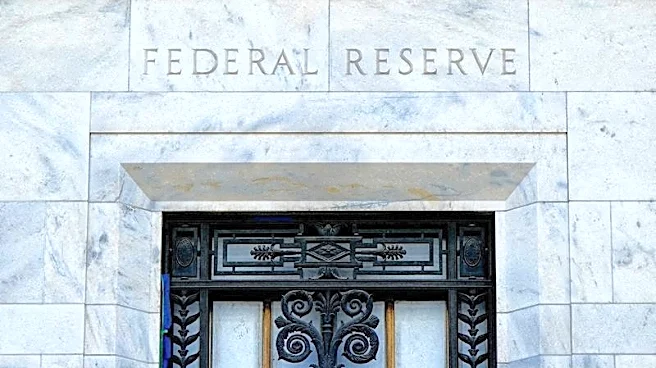
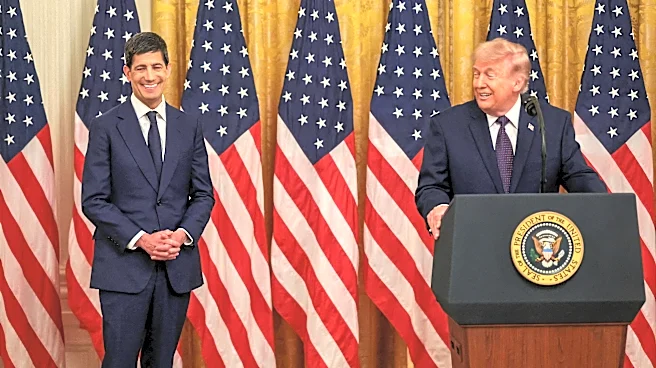
President Donald Trump has expressed opposition to raising interest rates following a strong U.S. jobs report. In an interview on NBC News' 'Meet the Press,' Trump argued that the Federal Reserve should not increase rates, as the economy is performing
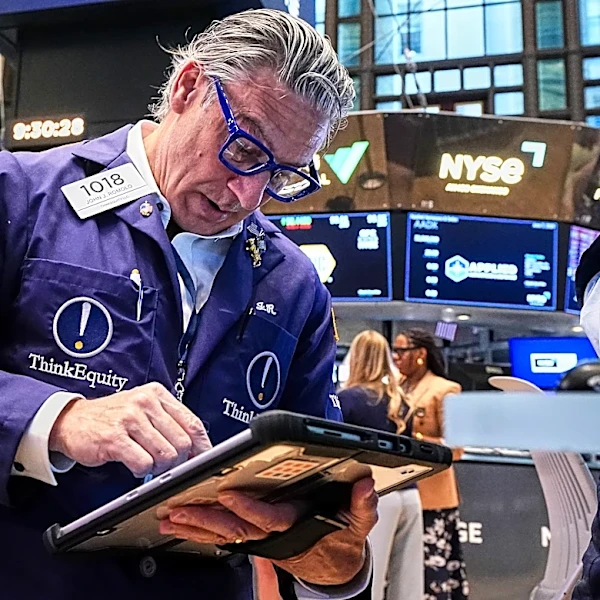
well. The recent jobs report showed an addition of 172,000 jobs in May, with unemployment remaining steady. Despite this, financial markets reacted negatively, anticipating potential rate hikes due to persistent inflation. Trump emphasized that economic success should not be penalized with higher interest rates and expressed confidence in Federal Reserve Chair Kevin Warsh's leadership.
Why It's Important?
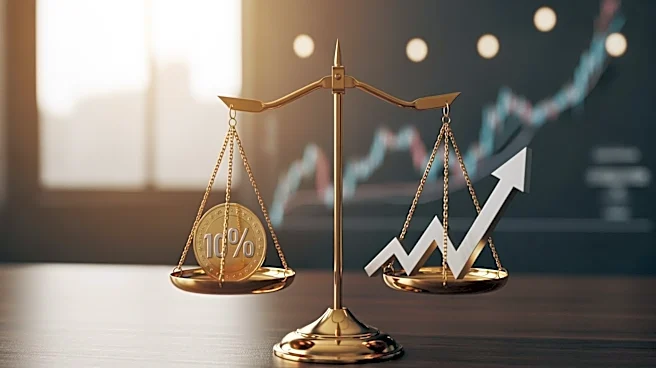
The debate over interest rate adjustments is crucial for the U.S. economy, as it affects borrowing costs, consumer spending, and overall economic growth. President Trump's stance against rate hikes highlights the tension between maintaining economic momentum and controlling inflation. The Federal Reserve's decisions will have widespread implications for businesses and consumers, influencing everything from mortgage rates to investment strategies. Trump's comments also underscore the political dimensions of monetary policy, as he seeks to balance economic performance with inflationary pressures.
What's Next?
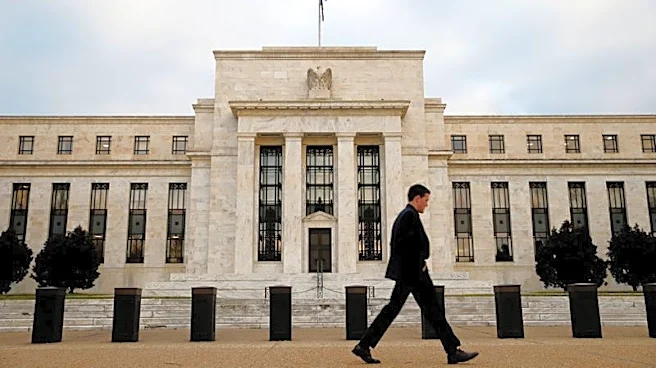
The Federal Reserve, under the leadership of Kevin Warsh, will need to navigate these economic challenges carefully. As the central bank considers its next moves, it will weigh the strong labor market against inflation concerns. The outcome of these deliberations will impact interest rates and, consequently, the broader economy. Stakeholders, including businesses and policymakers, will be closely monitoring the Fed's actions and their potential effects on economic stability and growth.