






What's Happening?
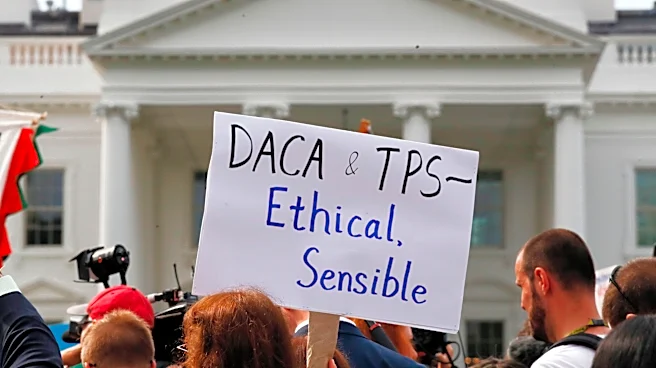
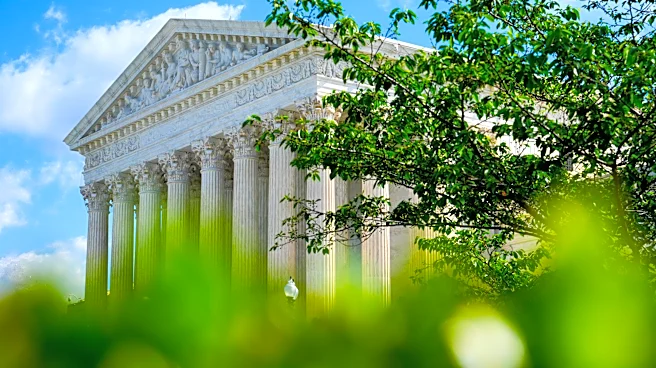
The U.S. Supreme Court is currently deliberating on a case involving the Trump administration's attempt to terminate Temporary Protected Status (TPS) for immigrants from Haiti and Syria. The administration argues that former Department of Homeland Security
Secretary Kristi Noem acted within her authority to end these protections, but the decision has faced legal challenges. During the hearings, justices appeared split along ideological lines, with liberal justices questioning the legality of Noem's actions and conservative justices focusing on procedural aspects. The case has significant implications for the 350,000 Haitians and 6,000 Syrians currently under TPS, as well as for the broader immigrant community in the U.S.
Why It's Important?
The outcome of this case could have far-reaching consequences for U.S. immigration policy and the lives of hundreds of thousands of immigrants. TPS provides critical protections for individuals from countries experiencing conflict or disaster, allowing them to live and work in the U.S. without fear of deportation. A ruling in favor of the Trump administration could set a precedent for future administrations to more easily revoke TPS, potentially destabilizing the lives of many immigrants and their families. The case also highlights ongoing debates about executive power and the role of the judiciary in reviewing administrative decisions, which could influence future legal interpretations of immigration law.
What's Next?
The Supreme Court's decision is expected to be released by the end of the current session in June. Depending on the ruling, there could be significant legal and political ramifications. If the court sides with the administration, it may prompt further legal challenges and legislative efforts to protect TPS recipients. Conversely, a ruling against the administration could reinforce judicial oversight of executive actions and provide a measure of security for TPS holders. The decision will likely influence ongoing discussions about immigration reform and the balance of power between the executive branch and the judiciary.