



What's Happening?
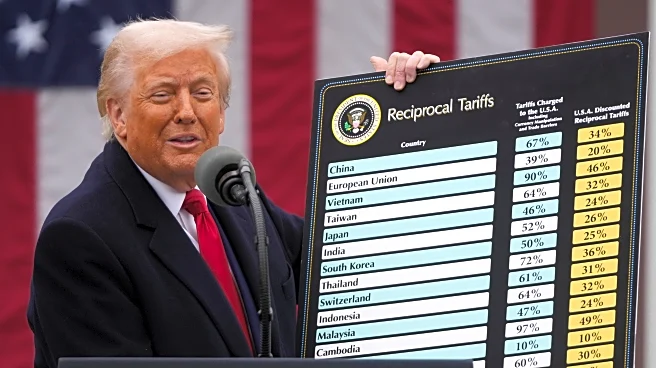
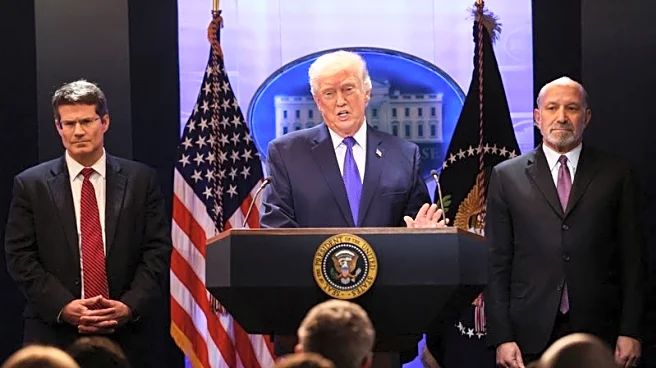
In response to the U.S. Supreme Court's decision invalidating tariffs imposed under the International Emergency Economic Powers Act (IEEPA), President Trump announced a new 10% global tariff under section 122 of the Trade Act of 1974. The court's ruling,
which found the use of IEEPA for tariffs unauthorized, opens the possibility of significant tariff refunds to importers. The new tariffs are intended to maintain policy continuity and apply across the board, adding to existing tariffs. This move has created uncertainty among economists and trade lawyers, as section 122's application at this scale raises legal and logistical questions.
Why It's Important?
The Supreme Court's decision and the subsequent imposition of new tariffs highlight the ongoing tension between executive power and judicial oversight in trade policy. The ruling could lead to substantial financial implications for importers, with potential refunds affecting corporate balance sheets. The new tariffs may disrupt global trade dynamics, affecting supply chains and market stability. This development underscores the need for clear legislative guidelines on trade authority and could prompt further legal challenges and congressional action.
What's Next?
The administration's pivot to section 122 tariffs is likely to face legal scrutiny, with potential lawsuits challenging their validity. Businesses and trade partners will need to navigate the evolving tariff landscape, assessing the impact on pricing and supply chains. The situation may prompt Congress to revisit trade laws and clarify the scope of presidential authority. As the U.S. seeks to balance trade enforcement with international relations, the outcome of these legal and policy shifts will be closely watched by global markets.