







What's Happening?
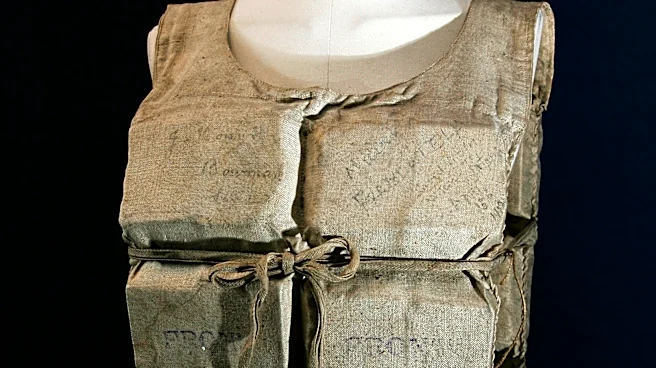
A life jacket worn by Laura Mabel Francatelli, a first-class passenger who survived the sinking of the RMS Titanic, was auctioned for 670,000 pounds ($906,000). The life jacket, signed by Francatelli and other survivors, was the highlight of a Titanic memorabilia
auction held by Henry Aldridge & Son in Devizes, England. The auction also featured a seat cushion from one of the Titanic lifeboats, which sold for 390,000 pounds ($527,000) to the owners of Titanic museums in Tennessee and Missouri. The high prices reflect the enduring fascination with the Titanic and the stories of its passengers.
Why It's Important?
The auction of Titanic memorabilia underscores the lasting impact of the ship's tragic sinking on popular culture and historical interest. The high prices achieved for these items highlight the continued demand for artifacts associated with the Titanic, which remains a symbol of early 20th-century luxury and disaster. The auction also serves as a reminder of the human stories behind the tragedy, as the life jacket and other items provide tangible connections to the individuals who experienced the event. The sale contributes to the preservation of maritime history and the ongoing exploration of the Titanic's legacy.
What's Next?
The interest in Titanic memorabilia is likely to continue, with future auctions and exhibitions expected to draw significant attention from collectors and the public. The preservation and study of Titanic artifacts will remain a focus for historians and museums, as they seek to uncover new insights into the ship's construction, voyage, and sinking. The enduring fascination with the Titanic may also inspire new research and exploration efforts, including potential expeditions to the wreck site. As the centennial of the Titanic's sinking approaches, commemorative events and educational initiatives are expected to further engage audiences with the ship's history.
Beyond the Headlines
The auction of Titanic artifacts raises broader questions about the value and ethics of collecting and selling historical items. While such sales can generate interest and funding for preservation efforts, they also prompt discussions about the ownership and accessibility of cultural heritage. The commercialization of historical artifacts may limit public access and understanding, as private collectors acquire items that could otherwise be displayed in museums. Balancing the interests of collectors, historians, and the public will be an ongoing challenge in the field of historical preservation.