


What's Happening?
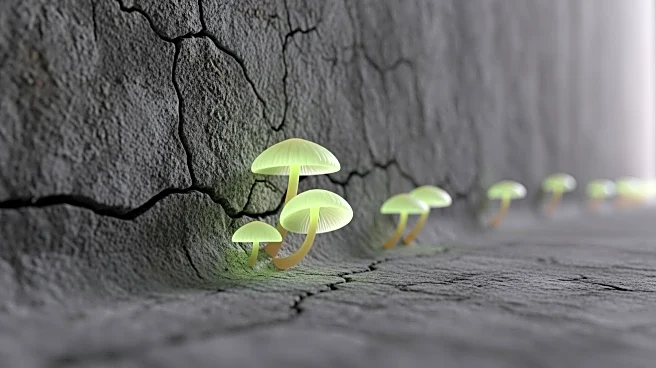
Inside the ruins of Chernobyl's Unit Four reactor, scientists have discovered a black fungus, Cladosporium sphaerospermum, that not only survives but appears to thrive in the presence of ionizing radiation. This discovery has prompted researchers to explore
the possibility that the fungus interacts with radiation in a unique way. The Chernobyl exclusion zone, largely off-limits to humans due to hazardous radiation levels, has become a site of interest for studying microbial life that has adapted to these extreme conditions. In the late 1990s, a survey led by microbiologist Nelli Zhdanova identified 37 fungus species in the contaminated site, with Cladosporium sphaerospermum being particularly prevalent. The fungus is rich in melanin, a pigment known to absorb radiation and protect against cellular damage. Research by Ekaterina Dadachova and Arturo Casadevall has shown that exposure to ionizing radiation enhances the growth of this fungus, suggesting a potential process similar to photosynthesis, termed radiosynthesis, where radiation is absorbed and converted into chemical energy.
Why It's Important?
The discovery of Cladosporium sphaerospermum's ability to thrive in radioactive environments could have significant implications for understanding microbial life in extreme conditions and the potential for biotechnological applications. The concept of radiosynthesis, if proven, could revolutionize how scientists view energy conversion processes in microorganisms. This could lead to new insights into how life can adapt to and utilize harsh environments, potentially informing the development of new technologies for energy production or bioremediation. Additionally, understanding the mechanisms that allow these fungi to survive and grow in high-radiation areas could contribute to advancements in radiation protection and mitigation strategies, benefiting industries and sectors dealing with radioactive materials.
What's Next?
Further research is needed to confirm the hypothesis of radiosynthesis and to understand the metabolic pathways involved in this process. Scientists will likely continue to study the interactions between Cladosporium sphaerospermum and ionizing radiation to determine how the fungus converts radiation into usable energy. This research could involve detailed genetic and biochemical analyses to identify the specific mechanisms at play. Additionally, exploring the potential applications of these findings in biotechnology and environmental science will be a key focus. The ongoing investigation into the resilience and adaptability of microbial life in extreme environments may also inform future studies on the potential for life in extraterrestrial settings, where radiation levels are significantly higher than on Earth.
Beyond the Headlines
The discovery of radiation-tolerant fungi in Chernobyl raises questions about the ethical and environmental implications of utilizing such organisms in biotechnological applications. There is a need to consider the potential risks and benefits of harnessing these fungi for purposes such as bioremediation or energy production. Additionally, the study of these organisms could provide insights into the long-term ecological impacts of radiation exposure on microbial communities and ecosystems. Understanding how these fungi interact with their environment may also shed light on the evolutionary processes that enable life to adapt to extreme conditions, offering a broader perspective on the resilience of life on Earth.