





What's Happening?
California Assembly Bill 2624, introduced by Assemblymember Mia Bonta, aims to provide privacy protections for immigrant aid workers facing harassment. The bill proposes an address confidentiality program similar to those for reproductive healthcare workers,
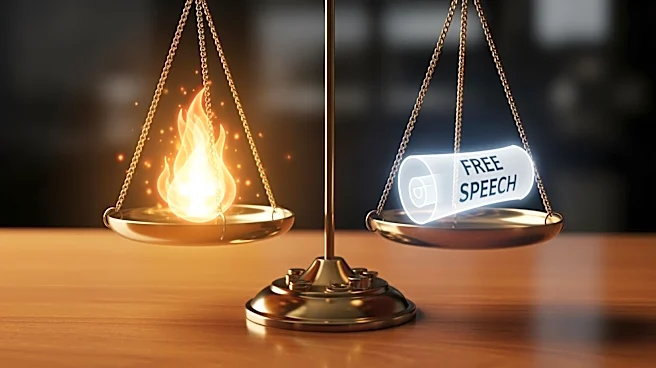
prohibiting the online posting of personal information about these workers. This initiative is a response to increasing threats and harassment faced by individuals working with organizations that offer legal and humanitarian aid to immigrants. However, the bill has sparked controversy, particularly among Republicans and First Amendment experts, who argue that it could suppress free speech and legitimate criticism. Critics, including David Loy from the First Amendment Coalition, express concerns that the bill could prevent individuals from discussing legitimate disputes online, potentially impacting investigative journalism and public discourse.
Why It's Important?
The proposed legislation highlights the tension between protecting individuals from harassment and preserving free speech rights. If enacted, the bill could set a precedent for similar privacy protections across various professions, potentially affecting how information is shared and discussed publicly. Supporters argue that the bill is necessary to safeguard immigrant aid workers from escalating threats, which could deter them from continuing their work. On the other hand, opponents warn that the bill's broad language might be misused to silence criticism and hinder journalistic efforts, raising concerns about transparency and accountability. The outcome of this legislative effort could influence future debates on balancing privacy and free speech in the digital age.
What's Next?
As the bill progresses through the California state legislature, it faces scrutiny and potential amendments to address concerns raised by First Amendment advocates. The Assembly Appropriations Committee will review the bill, and further discussions are expected to refine its provisions. Stakeholders, including legal experts and civil rights organizations, may continue to engage in dialogue to ensure that the bill effectively protects workers without infringing on free speech rights. The outcome of these deliberations could impact similar legislative efforts nationwide, as other states observe California's approach to balancing privacy and free speech.