







What's Happening?
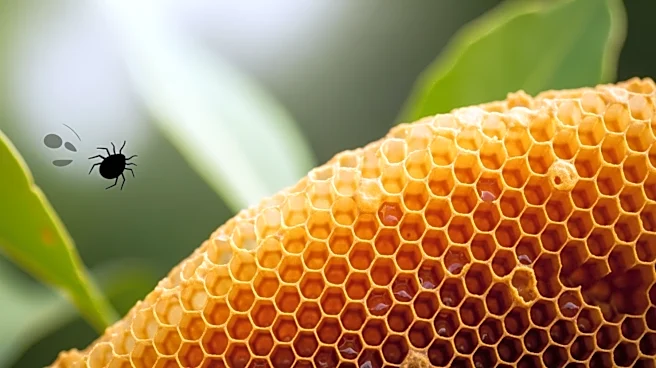
In Southern California, a unique hybrid bee population is demonstrating a natural ability to control Varroa mite infestations, a significant threat to honeybee colonies across the United States. According to research from UC Riverside, these bees, originating
from a naturally mixed population, carry about 68% fewer mites compared to commercial colonies. The study, led by Genesis Chong-Echavez, tracked 236 colonies over three years and found that these bees are significantly less reliant on chemical treatments. The hybrid bees, which combine traits from African, Eastern European, Middle Eastern, and Western European lineages, show less mite attraction during the larval stage, suggesting a genetic basis for their resistance.
Why It's Important?
The findings offer a potential breakthrough in the fight against Varroa mites, which are a major factor in the decline of honeybee populations. Honeybees are crucial pollinators for crops worth billions of dollars, and their decline poses a threat to food production. The natural resistance observed in these hybrid bees could lead to more sustainable beekeeping practices by reducing the need for chemical treatments, which can lose effectiveness over time. This research highlights the importance of genetic diversity and local adaptation in developing resilient bee populations.
What's Next?
Future research will focus on identifying the specific genetic, behavioral, and chemical traits that contribute to the hybrid bees' resistance to mites. This could inform breeding programs aimed at enhancing these traits in other bee populations. Researchers emphasize that current management practices should continue alongside these efforts. The collaboration with beekeepers will remain crucial in shaping future studies and applications of these findings.